



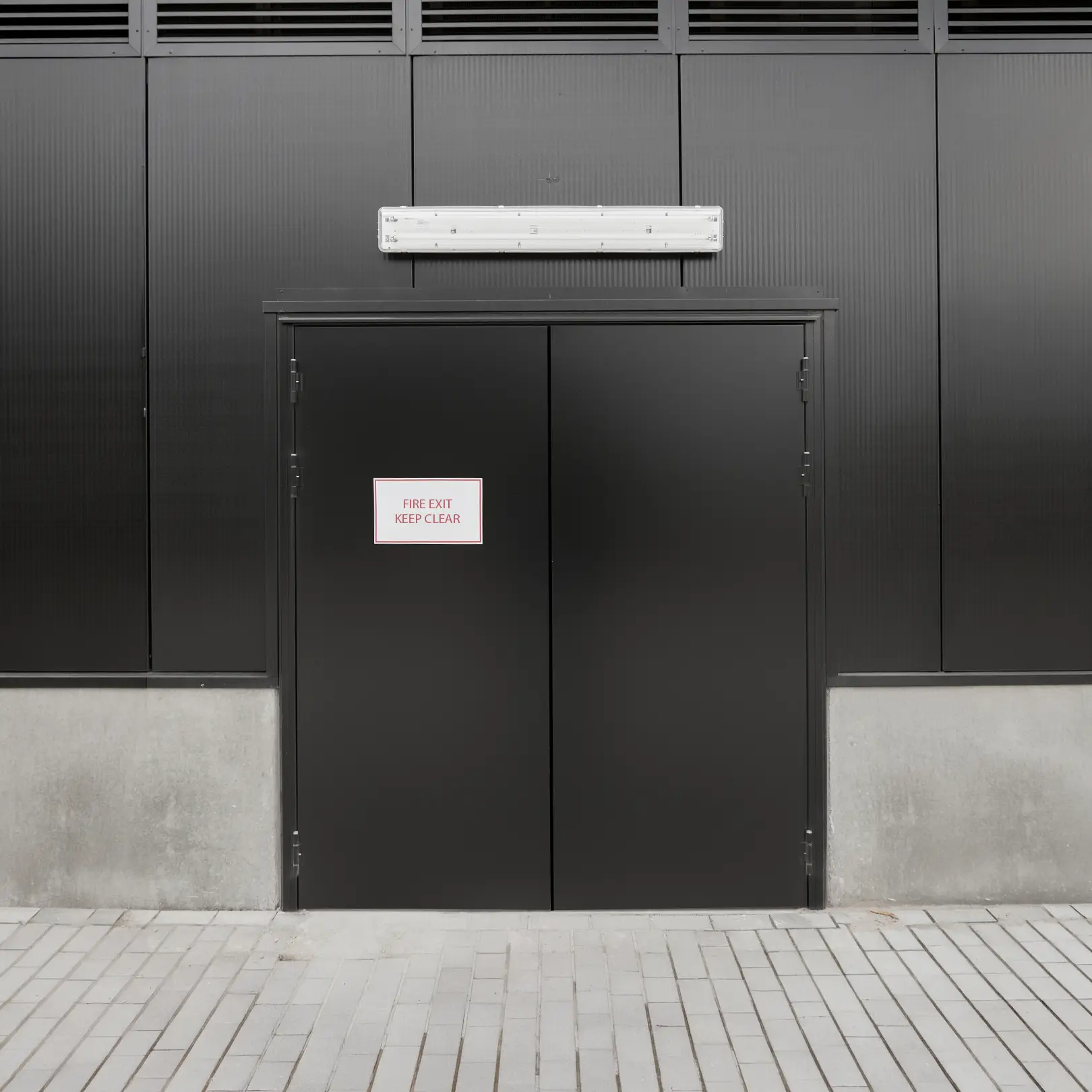
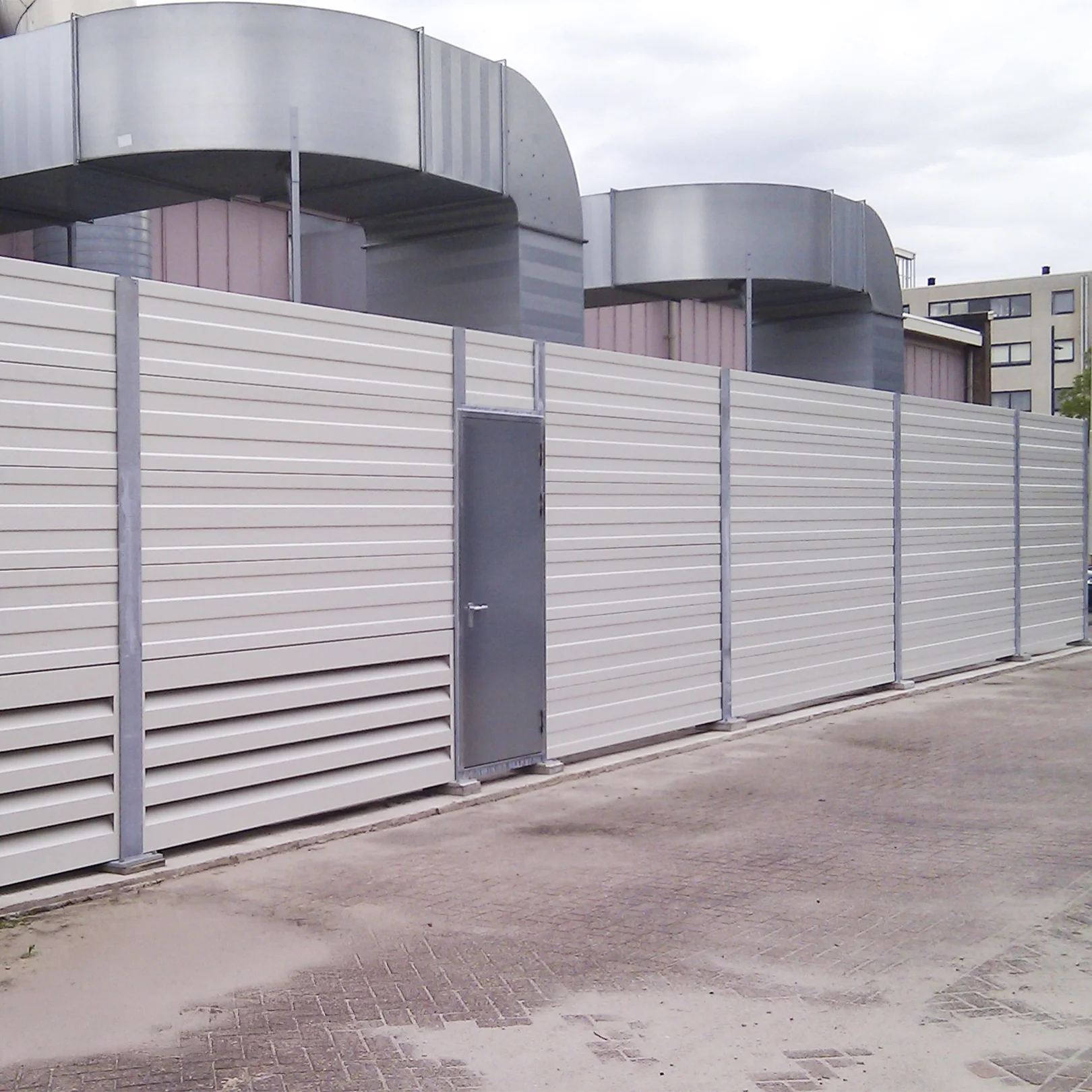
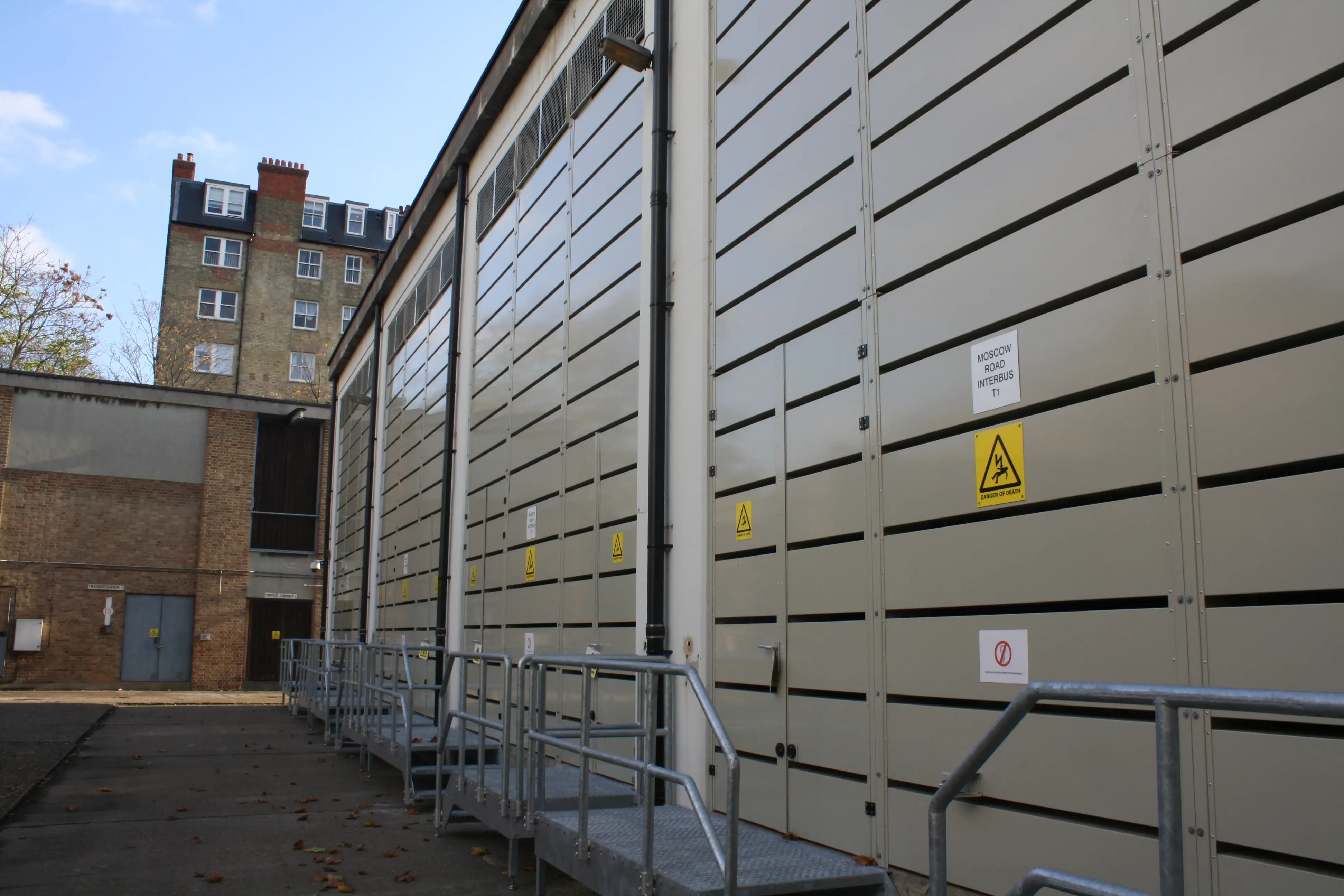

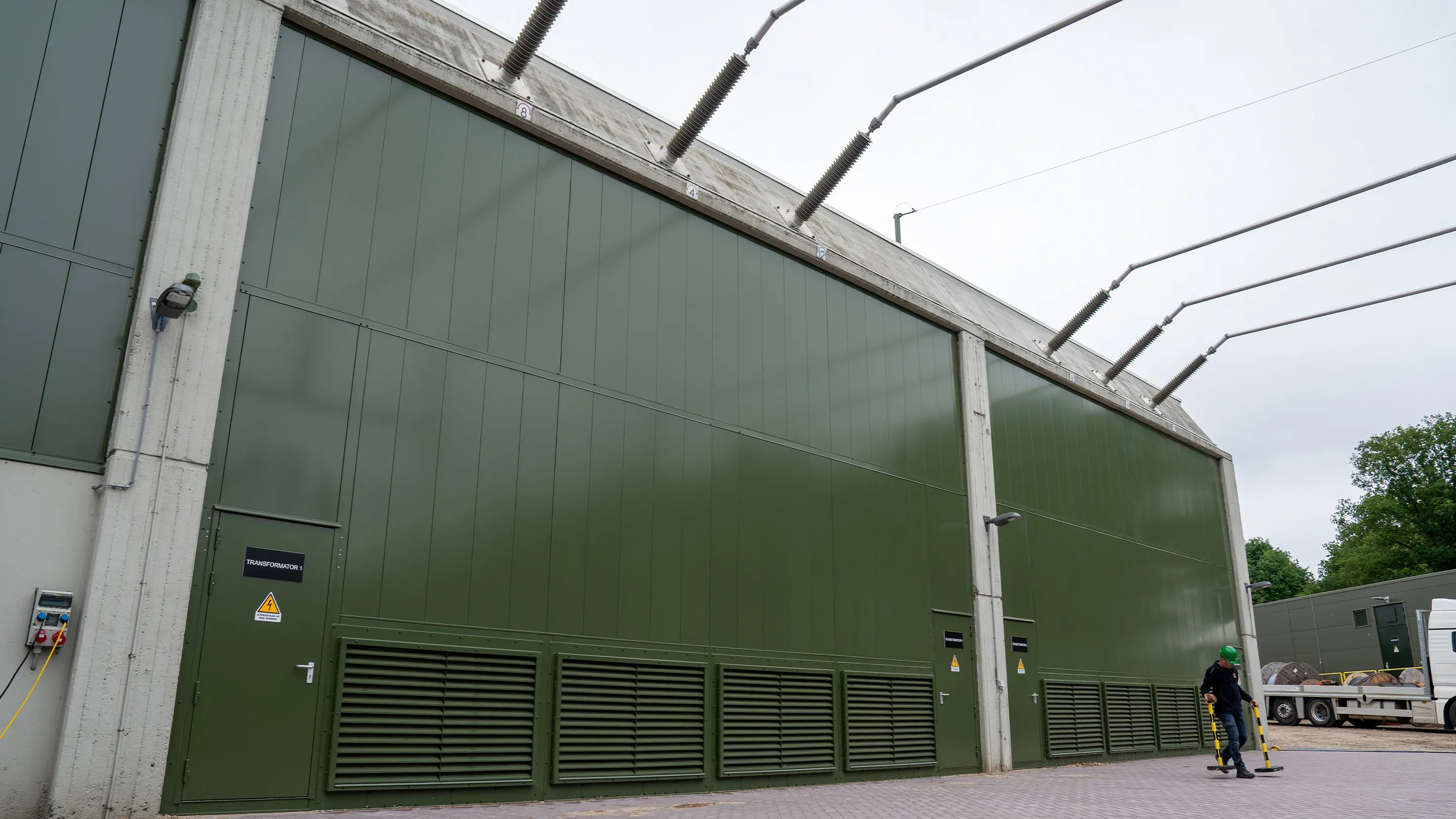
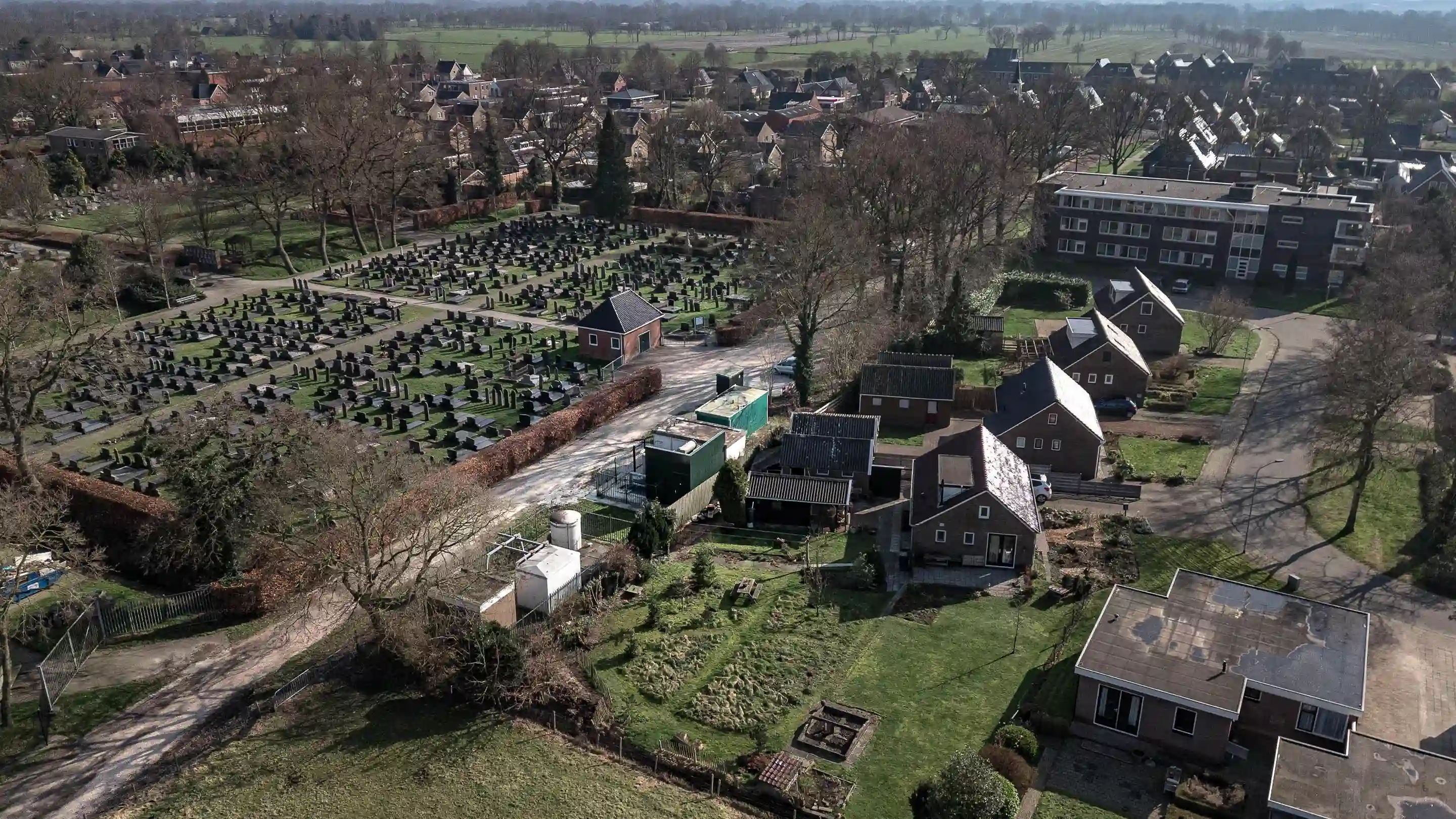
In Gennep, Enexis upgraded its transformer station with higher-capacity transformers and noise-reducing solutions from Merford, carefully tailored to the surrounding environment. This approach increases grid capacity while reducing noise disturbance for nearby residents.
Controlling low-frequency noise
Effective reduction of low-frequency noise
Reduce low-frequency noise from sources such as transformers, motors and HVAC units with ventilated acoustic solutions tailored to your installation.
Discuss your project with our engineers – no obligation.
Trusted by partners in demanding environments




Controlling low-frequency noise
Effective reduction of low-frequency noise
Reduce low-frequency noise from sources such as transformers, motors and HVAC units with ventilated acoustic solutions tailored to your installation.
Trusted by partners in demanding environments


Noise in lower frequencies
Silence you can feel
Low-frequency noise, usually 125 Hz or lower, is sound that you not only hear but also feel. It can appear as a deep hum or vibration, sometimes experienced as pressure on the ears. Because these low tones are hardly absorbed by air or building materials, they travel easily over long distances and can cause disturbance.
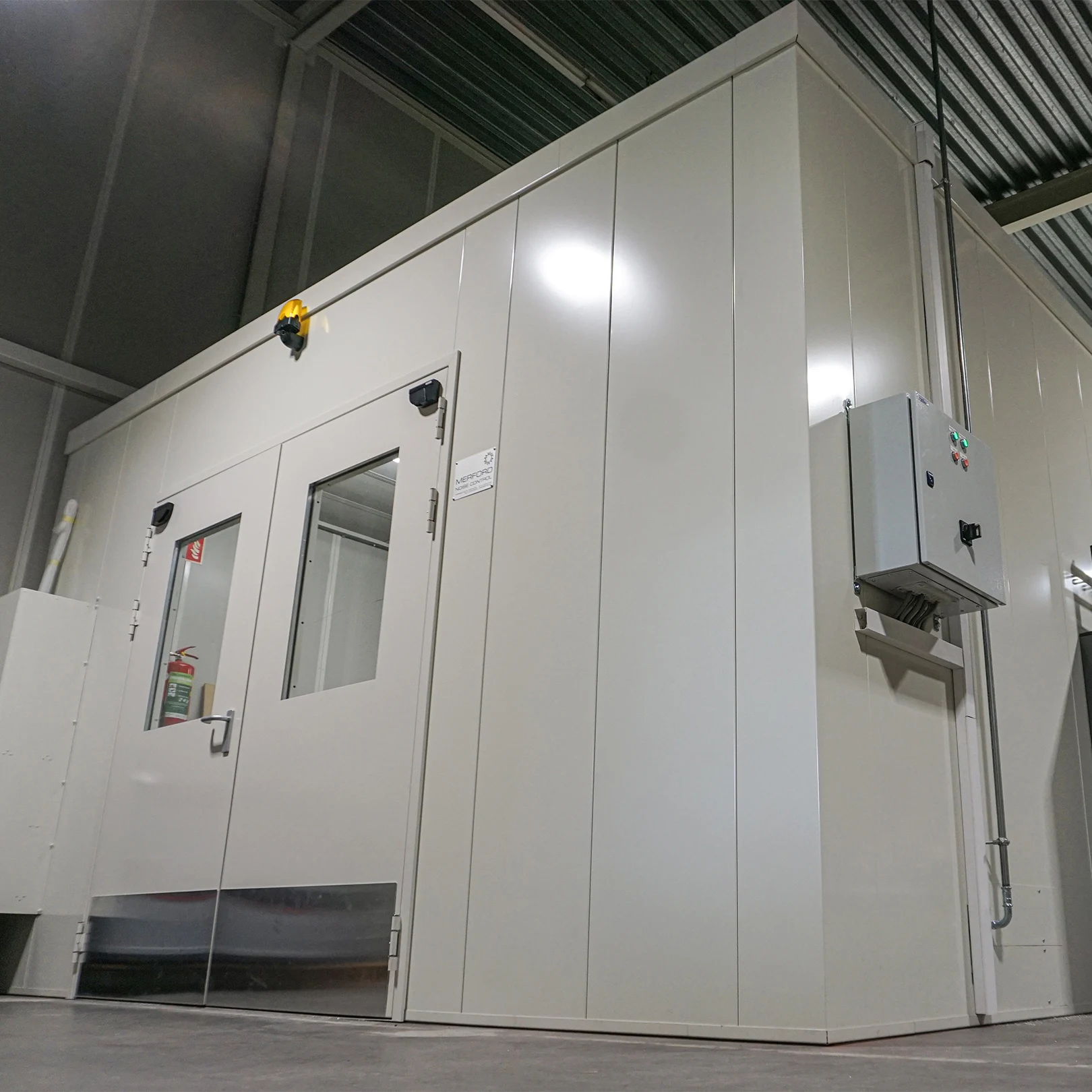
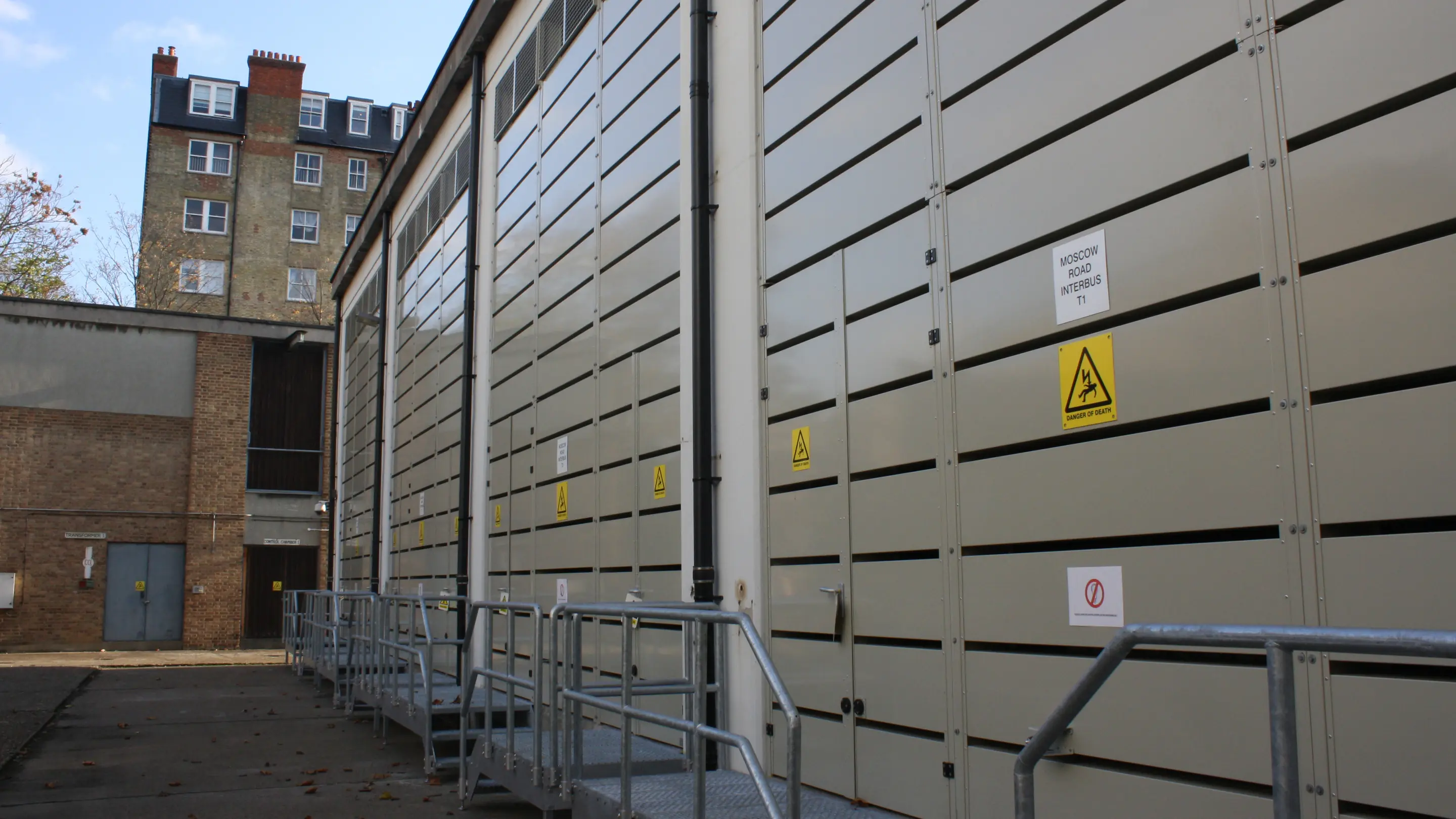
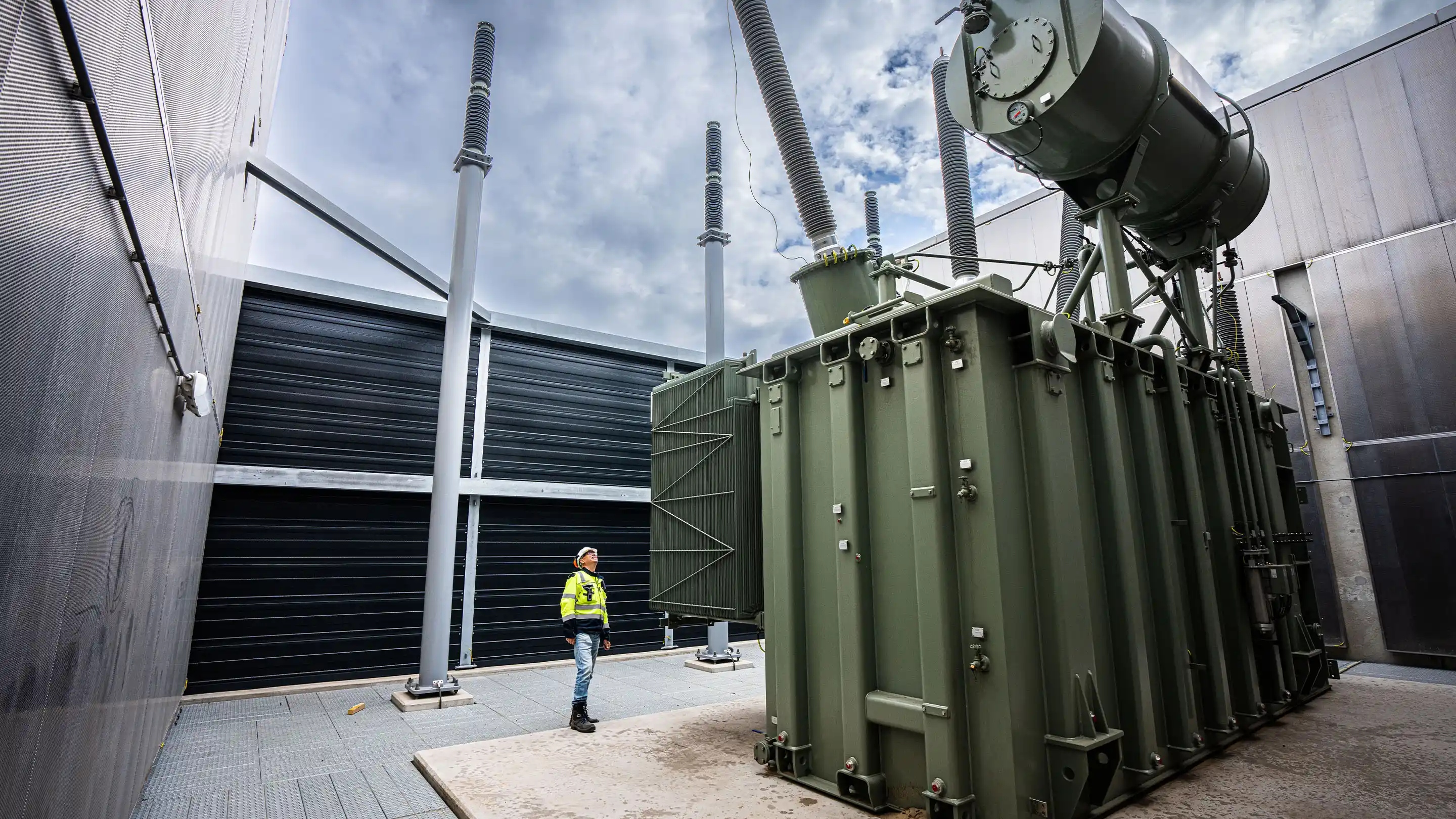
Merford develops solutions specifically designed to control low-frequency noise. They are used to reduce airborne noise from sources such as transformers, motors, machinery and HVAC systems, all of which require sufficient ventilation to operate effectively. Our solutions take this into account.
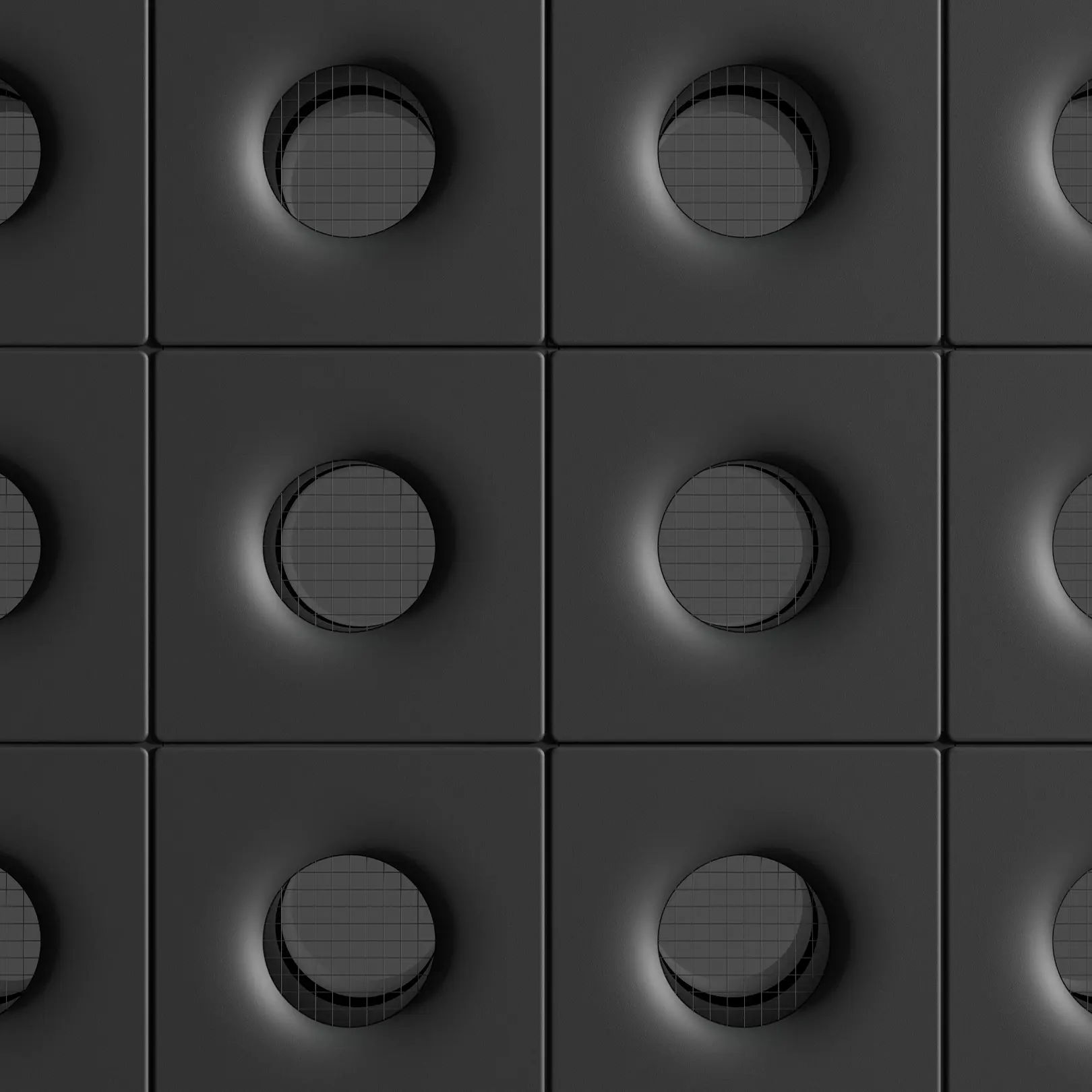
With precise attenuation in the 50–200 Hz range and a limited installation depth, our solutions are ideal for both new and existing situations, delivering powerful noise reduction exactly where it matters most.
Endless possibilities
Combine your desired features
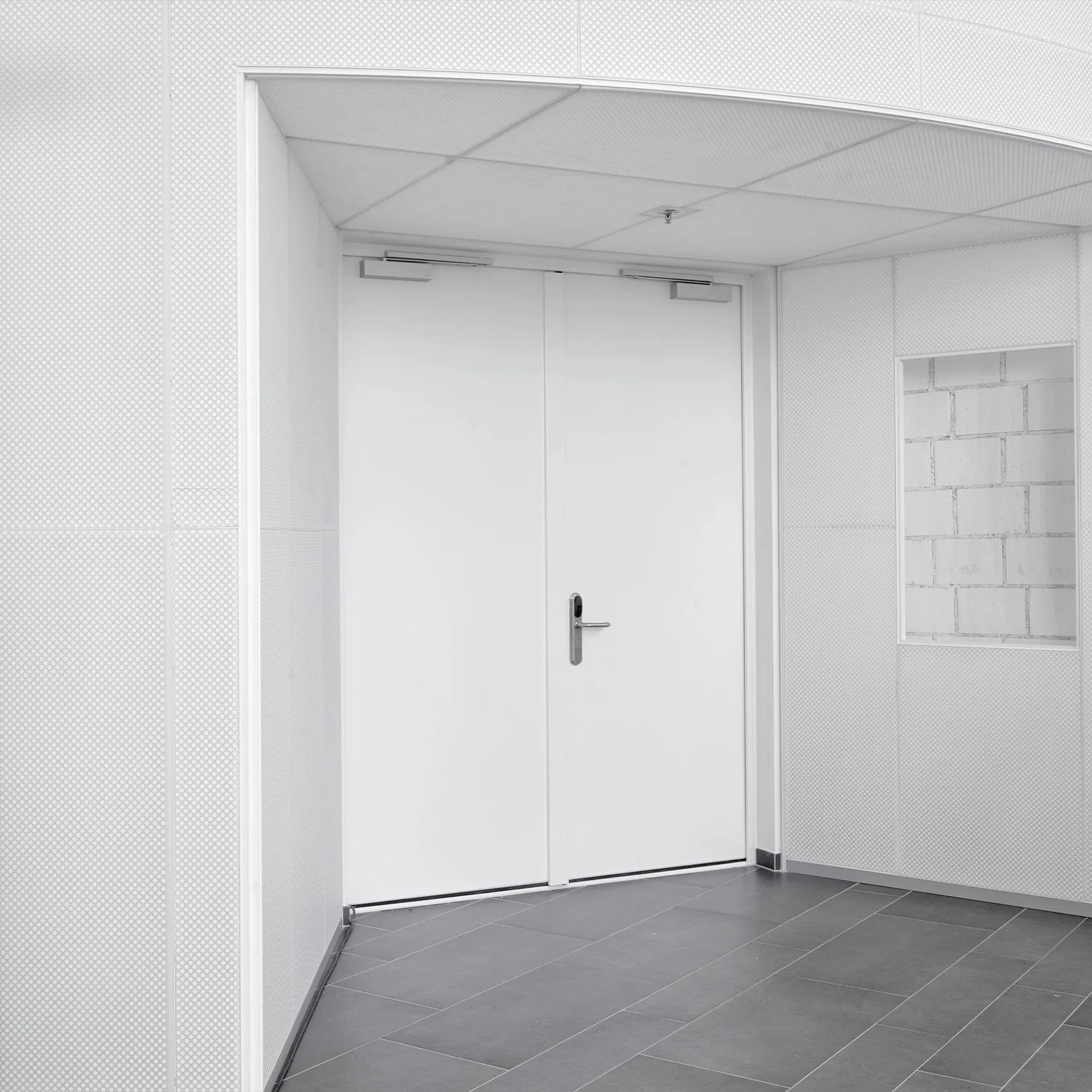
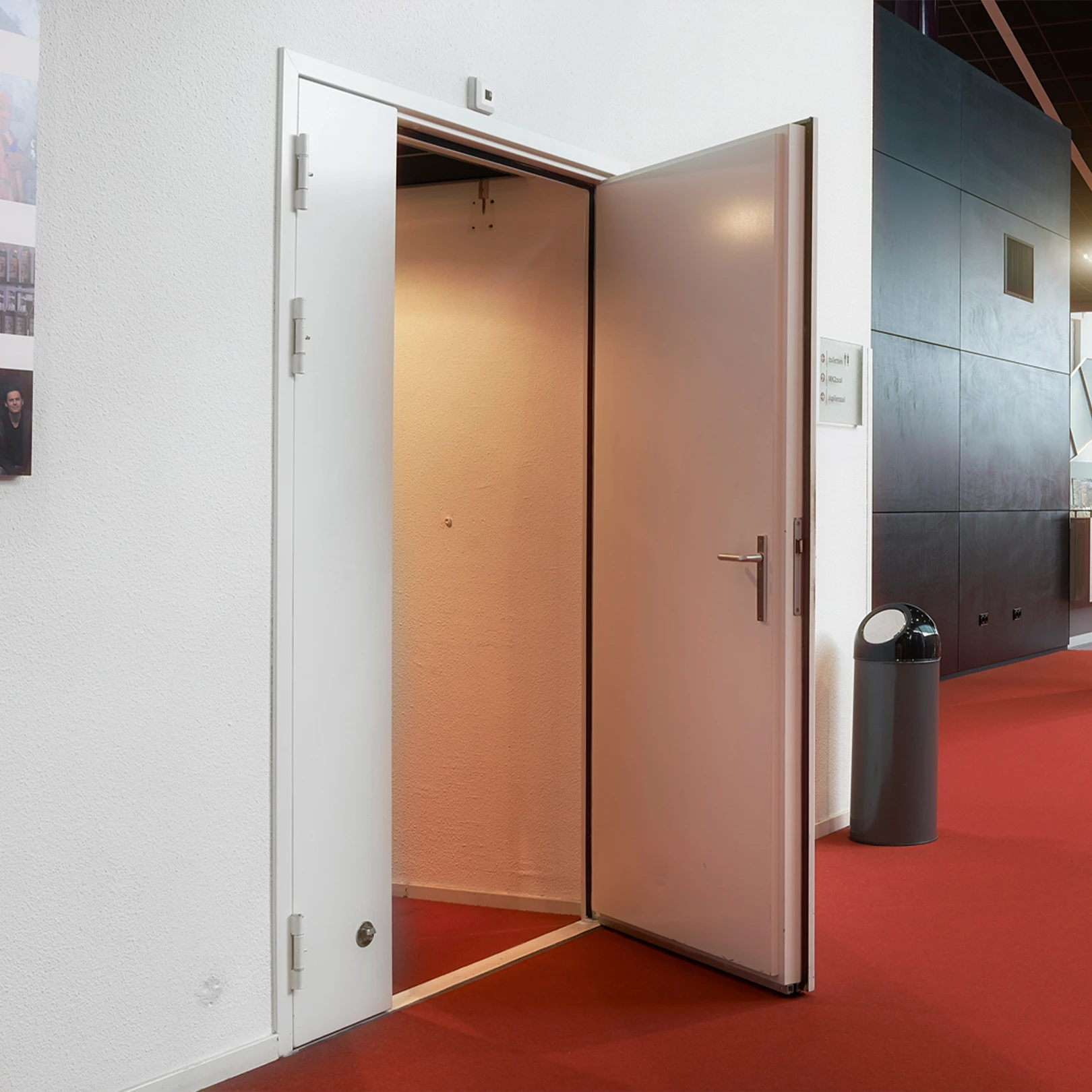
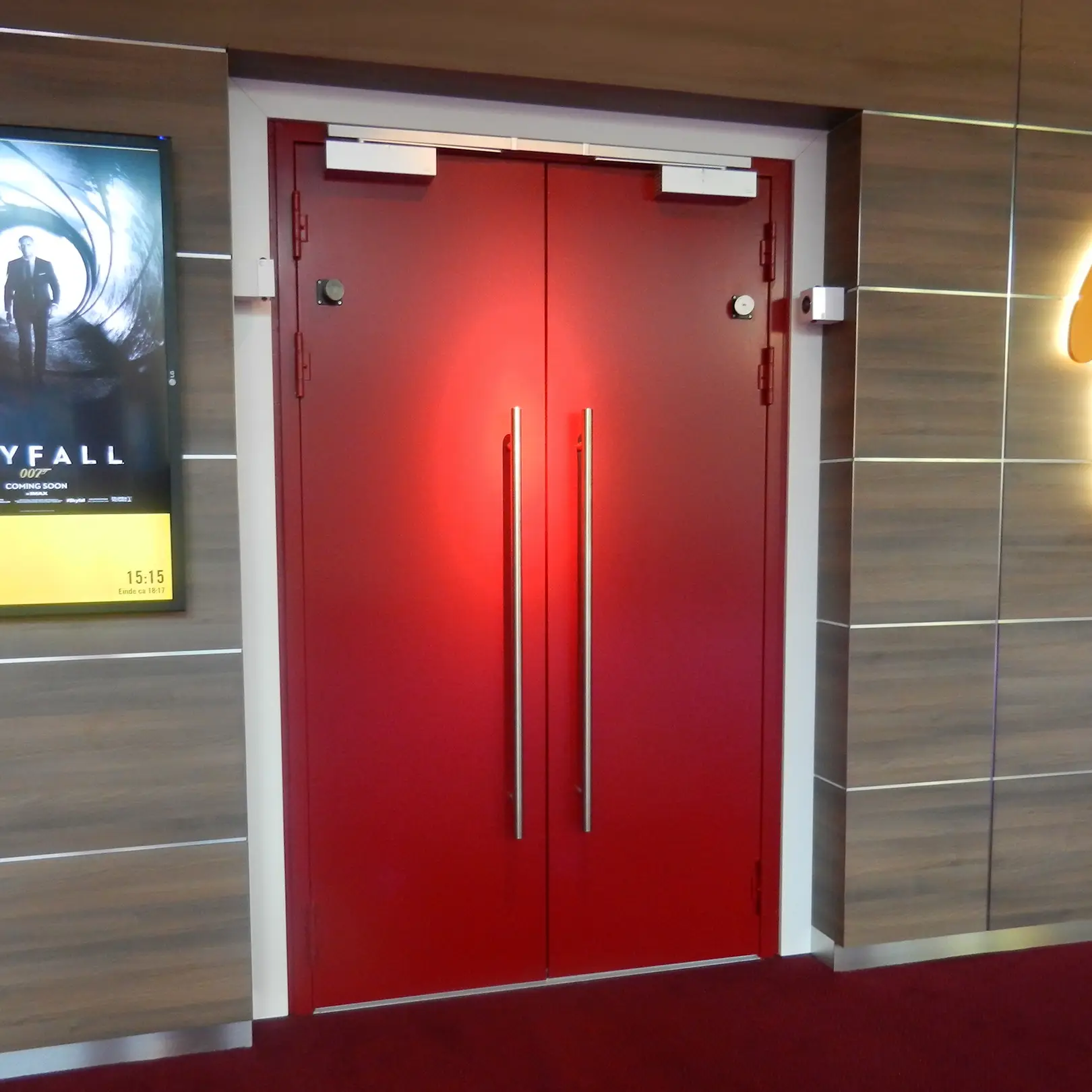
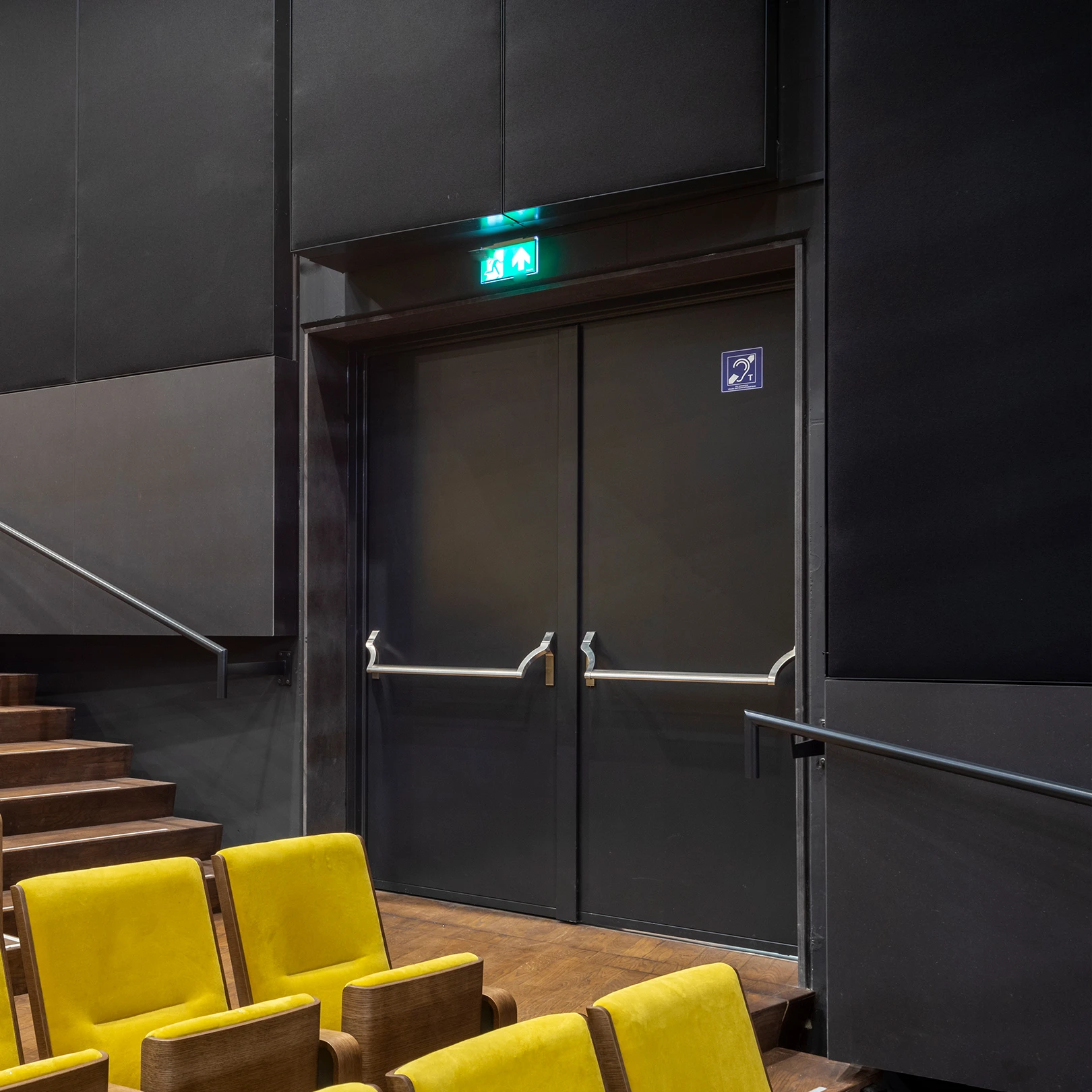
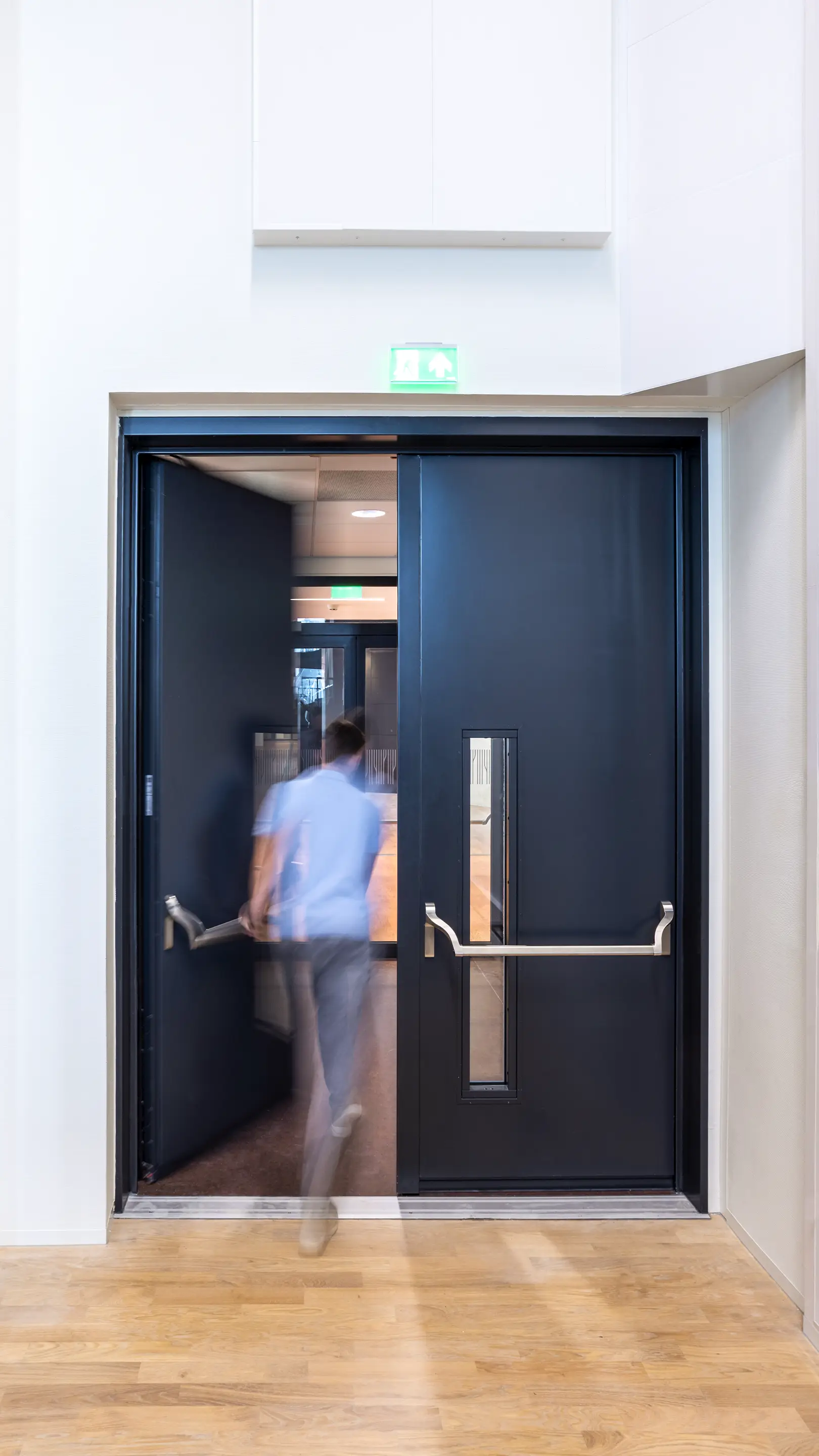
Each M-series door can be configured with a combination of properties and accessories to meet specific acoustic, fire, safety and design requirements.
Core features
Fundamental properties that define performance.

Sound insulation
Long-lasting performance for a quieter environment.

Fire resistance
Certified performance to contain and delay fire spread.

Smoke control
Prevents smoke infiltration in critical situations.

Burglary resistance
Reinforced protection against forced entry.

Bullet resistance
Reliable protection in high-security environments.

Air and gas tightness
Maintains fully sealed and controlled conditions.
All features are tested and certified according to European standards, ensuring reliable performance and compliance in every application.
Additional functions
Additional functions that enhance safety and control.

Anti-panic function
Enables safe and rapid evacuation during emergencies.

Access control
Integrated systems for secure entry management.
Specialised options
Solutions for highly specific technical environments.

Ventilation
Combines airflow with safety performance.

ATEX model
Certified safety for explosive-risk zones.

Transformer model
Specially designed for transformer rooms.
Tailored to your project
The best solution for your situation
Every situation is unique, and many factors need to be considered. We are happy to assess your specific case and help you find the most effective acoustic solution. Existing installations may involve certain requirements or constraints, while aspects such as ventilation needs, target attenuation levels and relevant frequencies also influence the design.
Our approach includes:
- Tailor-made solutions that perfectly match your requirements
- Noise measurements and acoustic calculations
- Computational Fluid Dynamics (CFD) simulations for accurate prediction of airflow and sound

Suitable for complex environments
Designed for low frequencies

Modular and adaptable
Depending on the type of noise source, a specific solution is designed. Adjustments in material selection, colour, dimensions and shape (e.g. cut-outs) are possible to fully meet your requirements.

Knowledge-driven approach
Our experts combine acoustic expertise with advanced engineering to find the most effective solution for every situation.

Insight through data
We carry out noise measurements, calculations and simulations to accurately predict performance before implementation.

Designed for real-world conditions
Our products and systems are tested and refined to perform reliably in both new and existing installations.
Products
M-series doors
Products
Modular systems
Proven in practice
We turn challenges into results
We're here to help
Answers to common questions

.webp)


+150
Our experts are here to help you find the right solution for your challenge.
Monday to Friday — between 09:00 and 17:00
How do I know if my issue is caused by low-frequency noise?
Low-frequency noise is often recognised as a constant hum or vibration. You may not always hear it clearly, but you can feel it or experience it as pressure. If you are unsure, a measurement or analysis can help identify the source and type of noise. Based on this, we can suggest a suitable solution.
Can Merford help reduce low-frequency noise in my design?
Yes. We can help with both new projects and existing buildings. Merford works with architects, engineers and contractors to include solutions for low-frequency noise in the design. This can be done from the start of a project or added later to an existing building. Our systems are flexible and can be adapted to each situation. This helps reduce noise, meet regulations and keep everything looking neat.
For which noise sources does Merford offer a solution?
Merford provides solutions for a wide range of low-frequency noise sources. This includes technical installations such as ventilation systems, heat pumps, compressors and generators. We always look at the specific situation and the source of the noise. Based on this, we determine the most suitable solution to effectively reduce the noise.
What is low-frequency noise and why is it so disturbing?
Low-frequency noise consists of deep sounds, such as humming or rumbling. This can come from installations, machinery or traffic. This type of noise is harder to block and can travel easily through walls and floors. As a result, you may still hear or feel it at a distance. Many people find it tiring or disturbing, especially over longer periods.