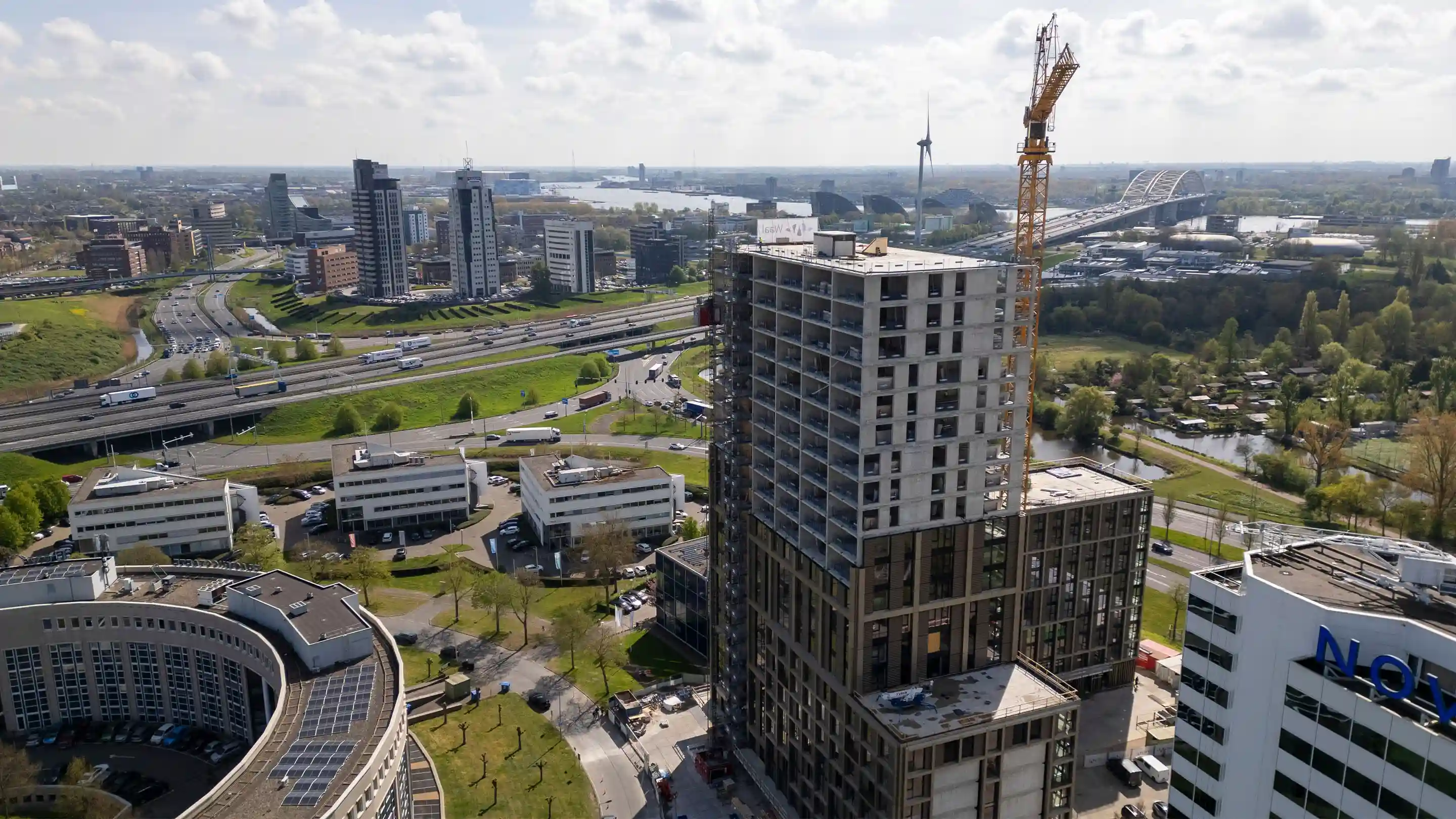
Living alongside a busy motorway requires smart solutions. For the new Canvas Living development in Rotterdam, we designed custom-made façade grilles that let fresh air in while keeping traffic noise out. This creates a healthy and comfortable living environment right in the heart of the city.
Case study
± 3 min
Sound insulation in the centre of Brussels
In the centre of Brussels, historic buildings have undergone sustainable renovations while retaining their original purpose. The challenge was to modernise these buildings without increasing noise pollution for the surrounding area. This project demonstrates how smart sound reduction solutions help to minimise noise pollution and create a pleasant living and working environment in a busy city.
We ensured that the installation complies with the 45-degree rule and remains out of sight.
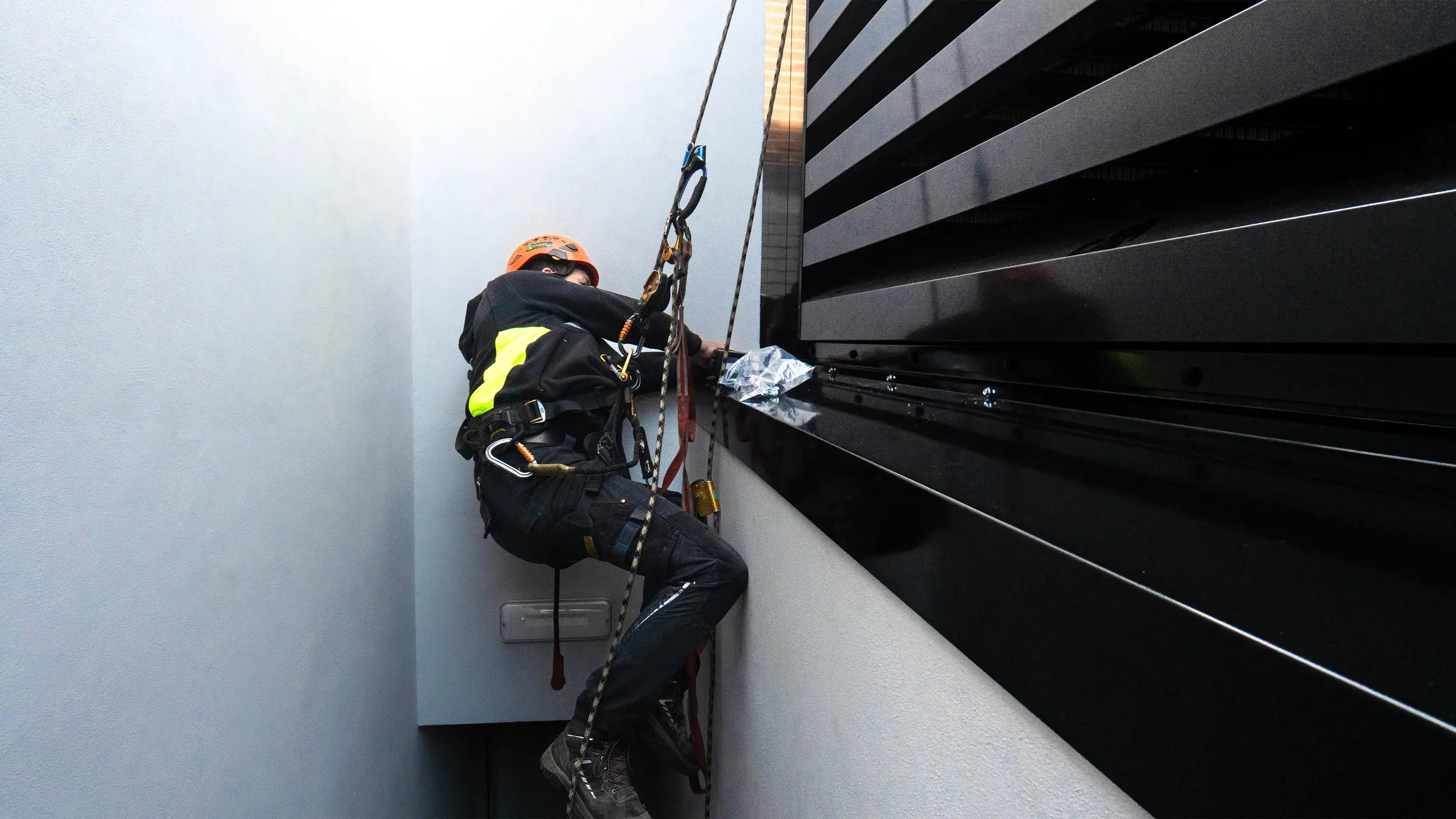
Cabinet offices and other offices of the Flemish government
Martelaarsplein in Brussels is home to several historic buildings. They are primarily used as cabinet offices and other offices of the Flemish government. The Flemish Agency for Facility Operations carried out renovations at this location that prioritised sustainability and energy efficiency.
As part of a renovation of the installation technology, two external heat pump units were to be installed on the roof. However, the client also wanted to minimise noise pollution for the surrounding buildings. The government places limits on noise pollution in busy city centres to protect the quality of life and health of local residents.
When reducing excessive noise from HVAC installations, we also consider factors as accessibility, future maintenance, ventilation and fire safety. With custom acoustic solutions, Merford provides the most optimal solution for every situation.
A combination of noise reducing solutions
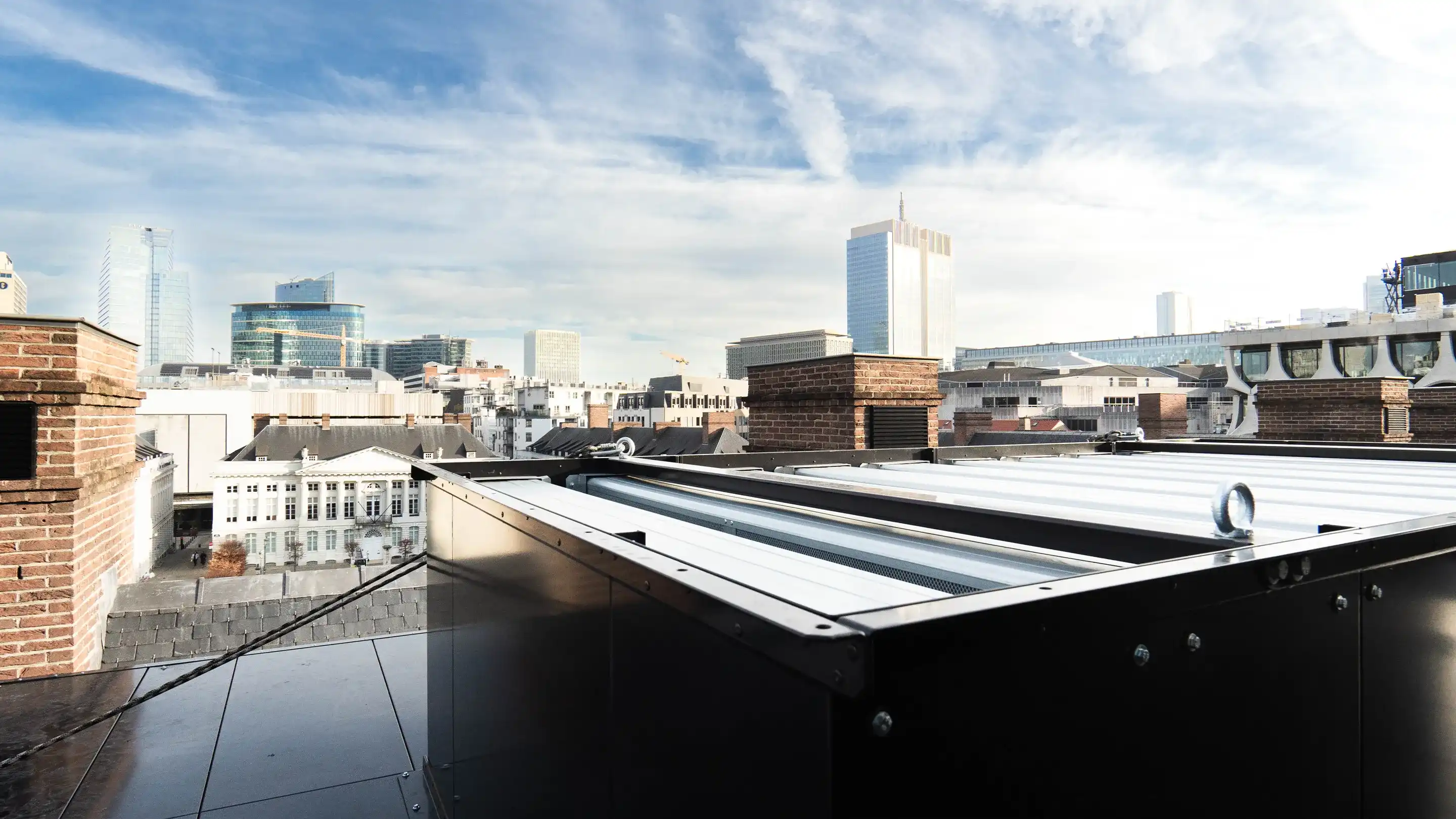
To achieve the desired noise reduction of the machines, we opted for designing a custom casing consisting of SKS panels. This casing ensures that low frequency sound is dampened close to the source. The modular system meant that in the design phase we could immediately incorporate IXKA splitter silencers on the roof of the casing infront of the air outlet, AKR350 grills on the side in front of the air inlet and a sound insulating access door, the M47 model from the M series, to allow for simple access for maintenance.
Captured on site



Collaborative design process
Commissioned by the contractor Artes Roegiers S.A. and in collaboration with engineering firm VK Architects & Engineers (now Sweco), this project was carried out on behalf of the Flemish government. A major challenge in this collaborative design process was ensuring that the installation complied with the 45 degree law. This rule stipulates that technical installations on roofs must not be visible at a sight line of 45 degrees.
Behind the project
"With the SKS enclosure, we stayed neatly within the 45 degree law. The splitter silencers are on top. They fall outside this rule as they are considered an outlet."

Related case studies