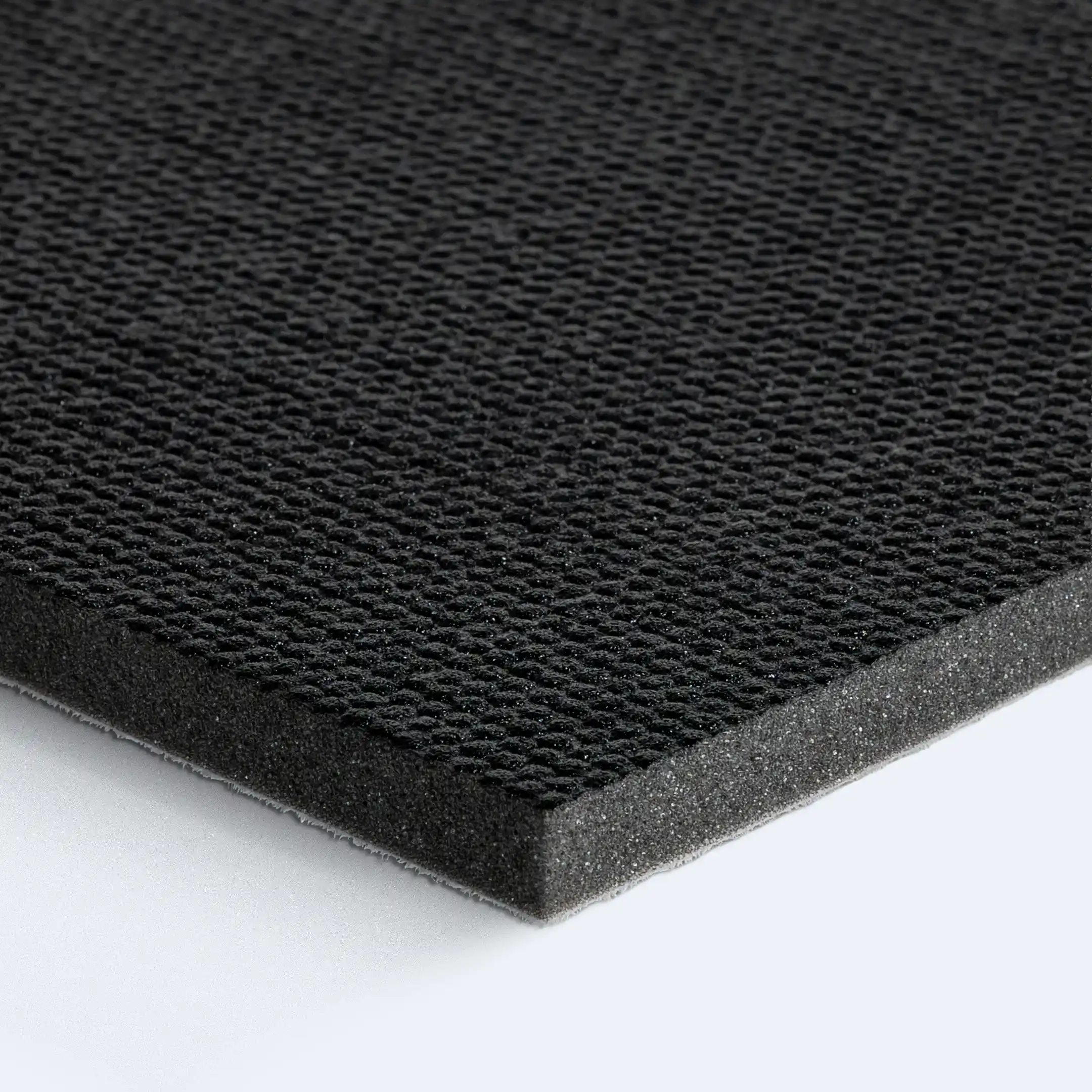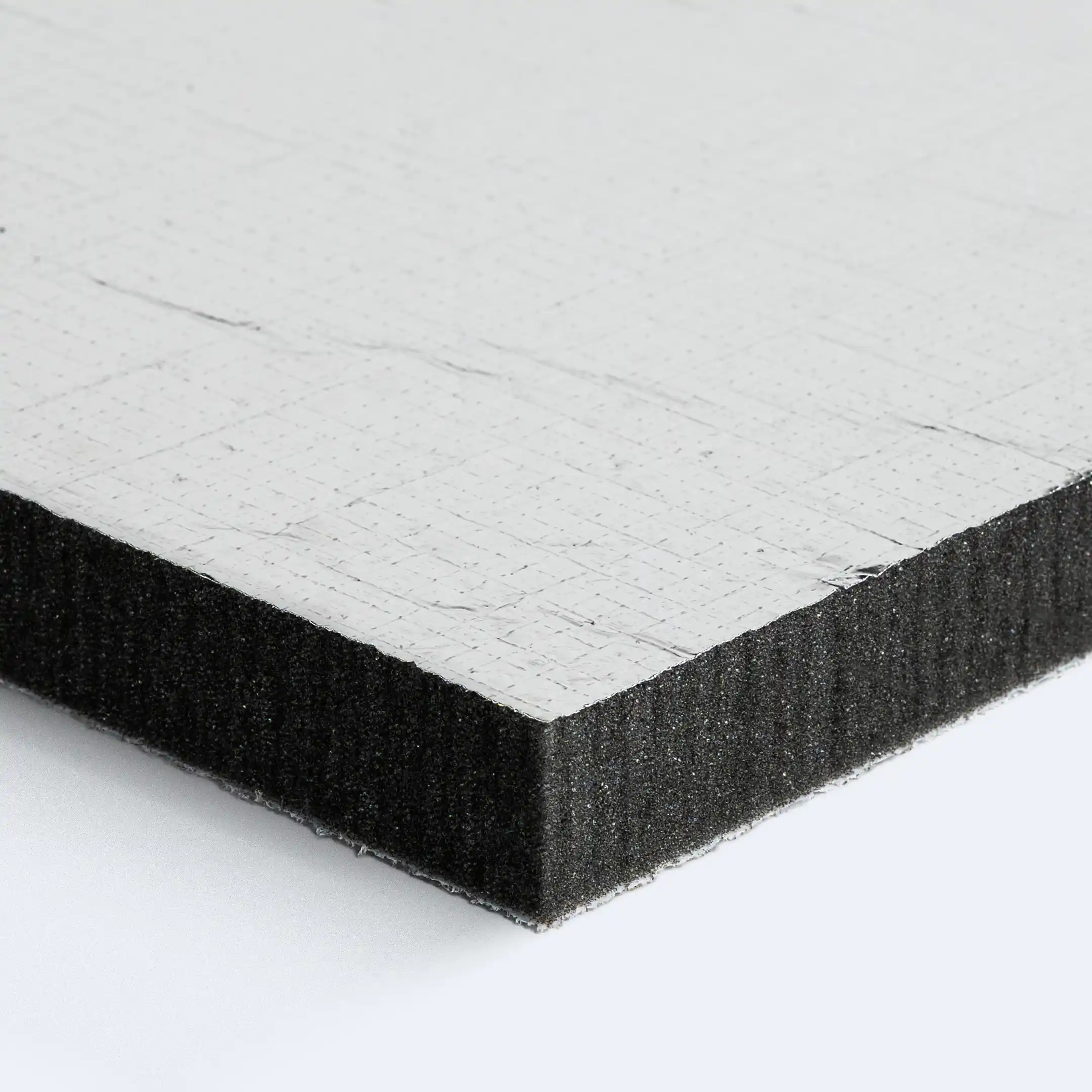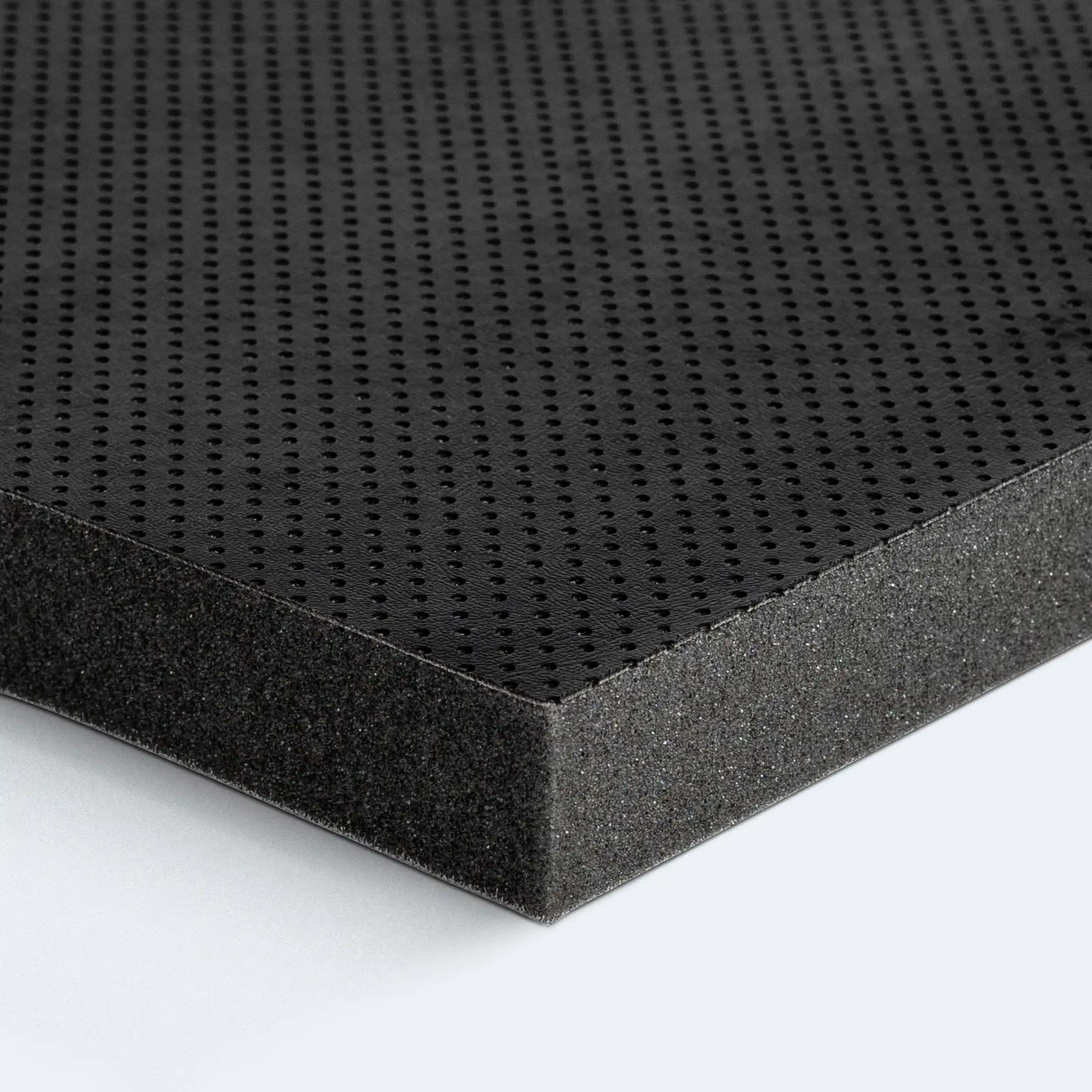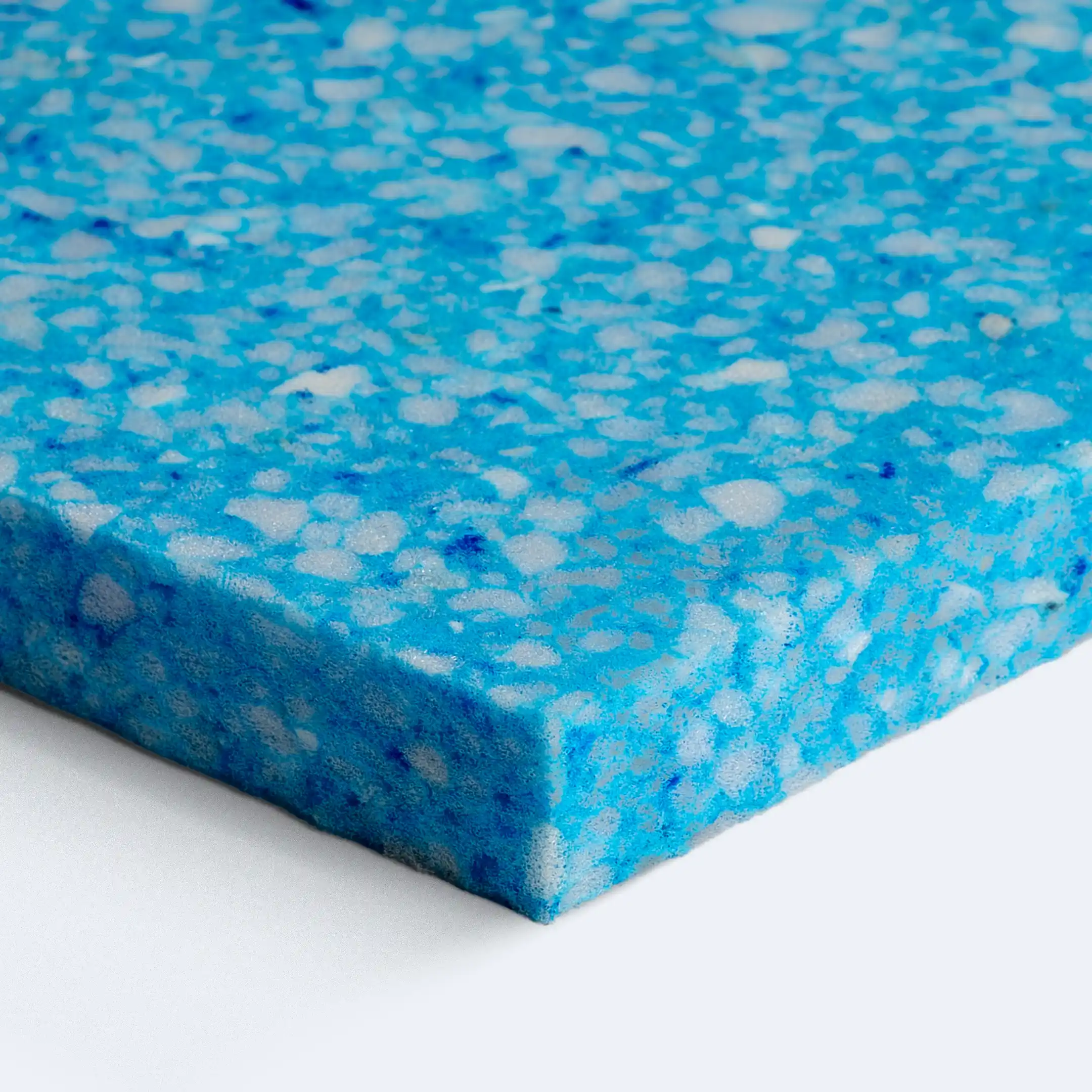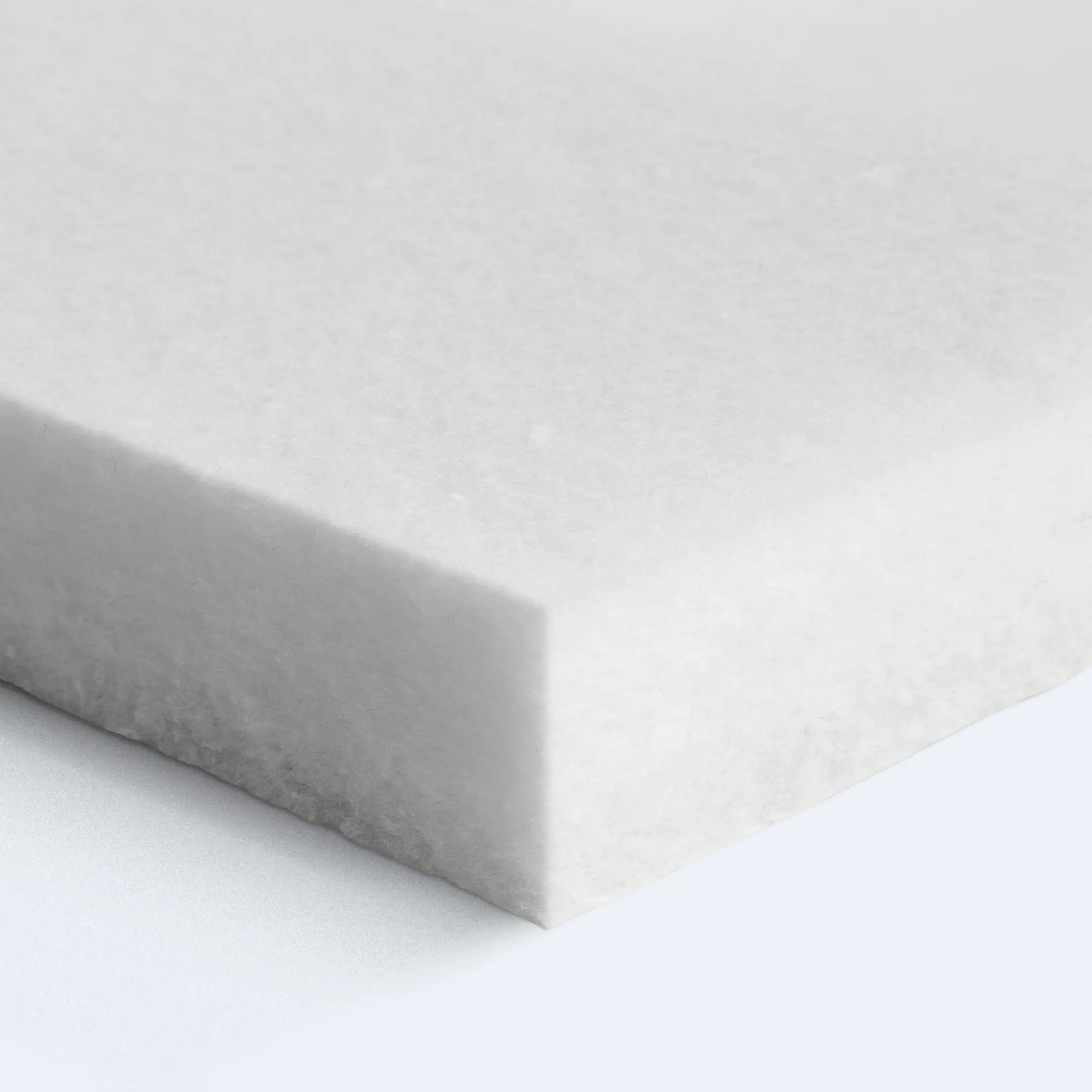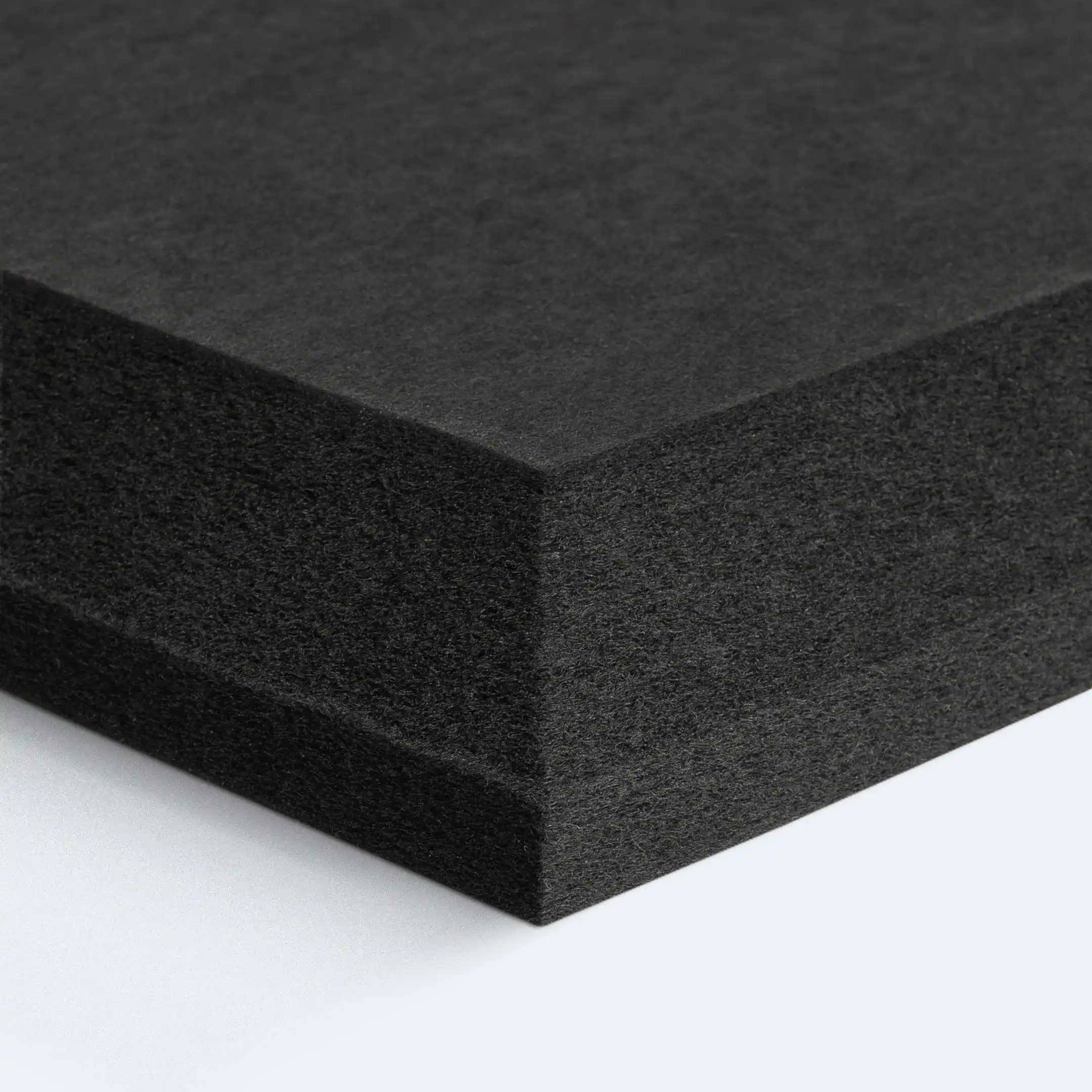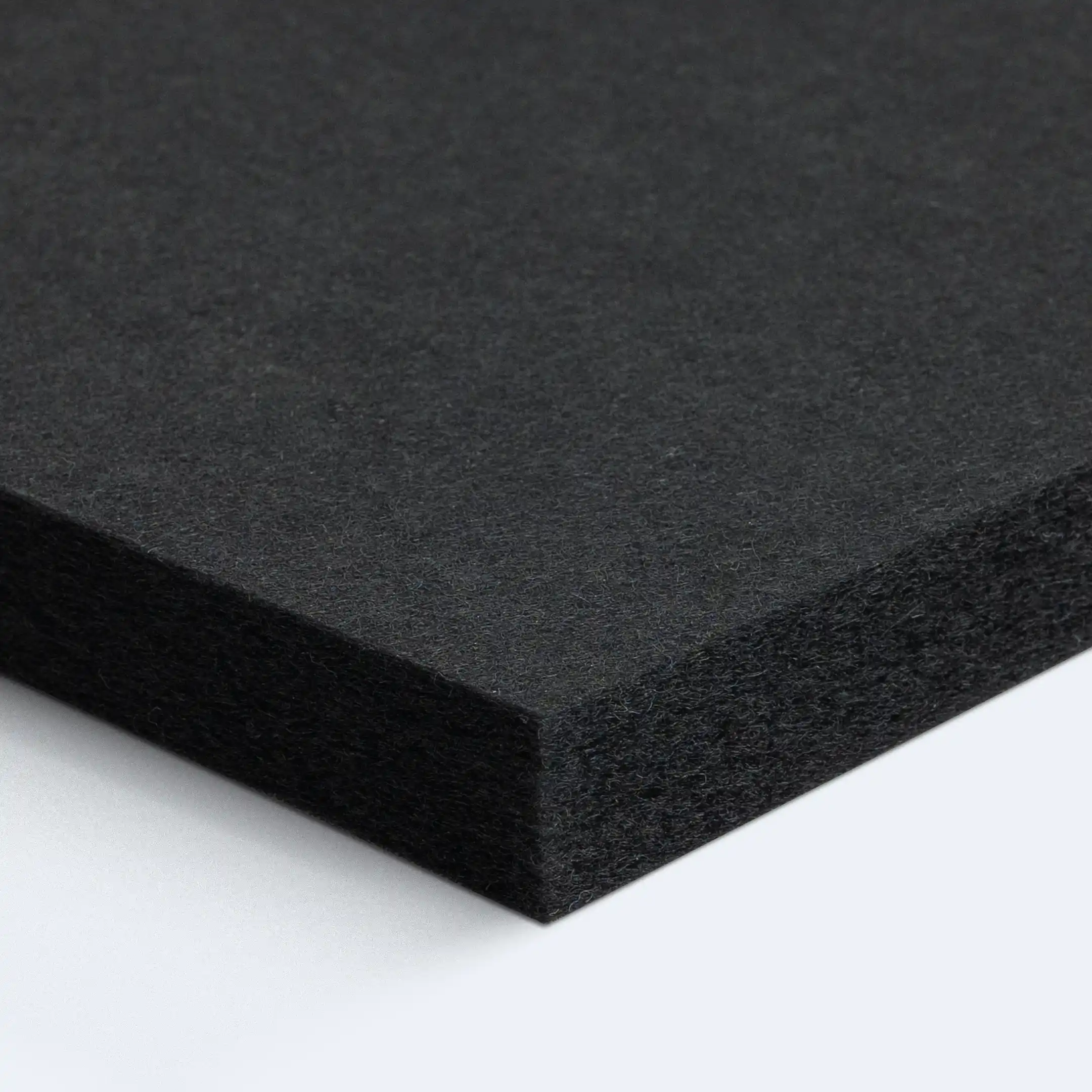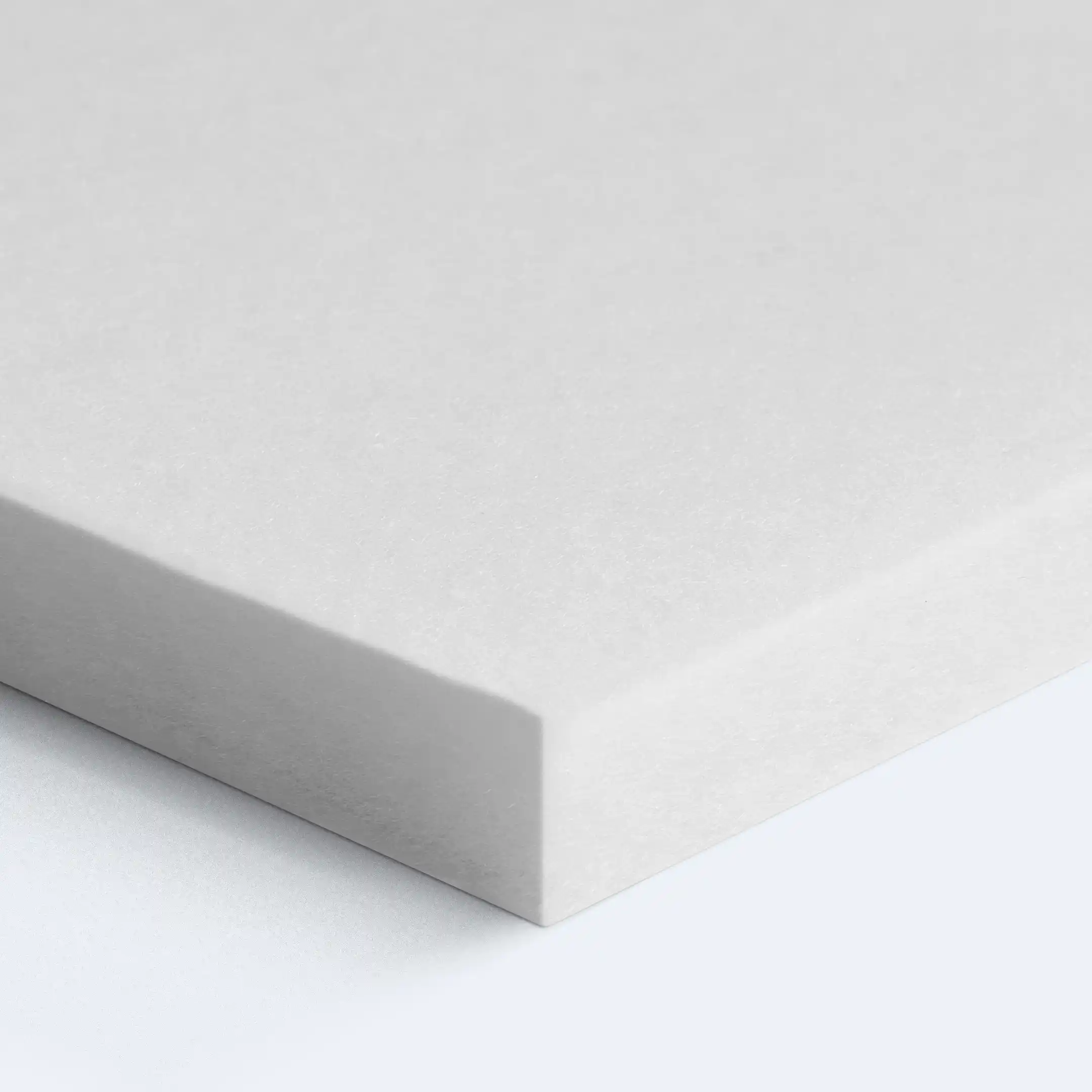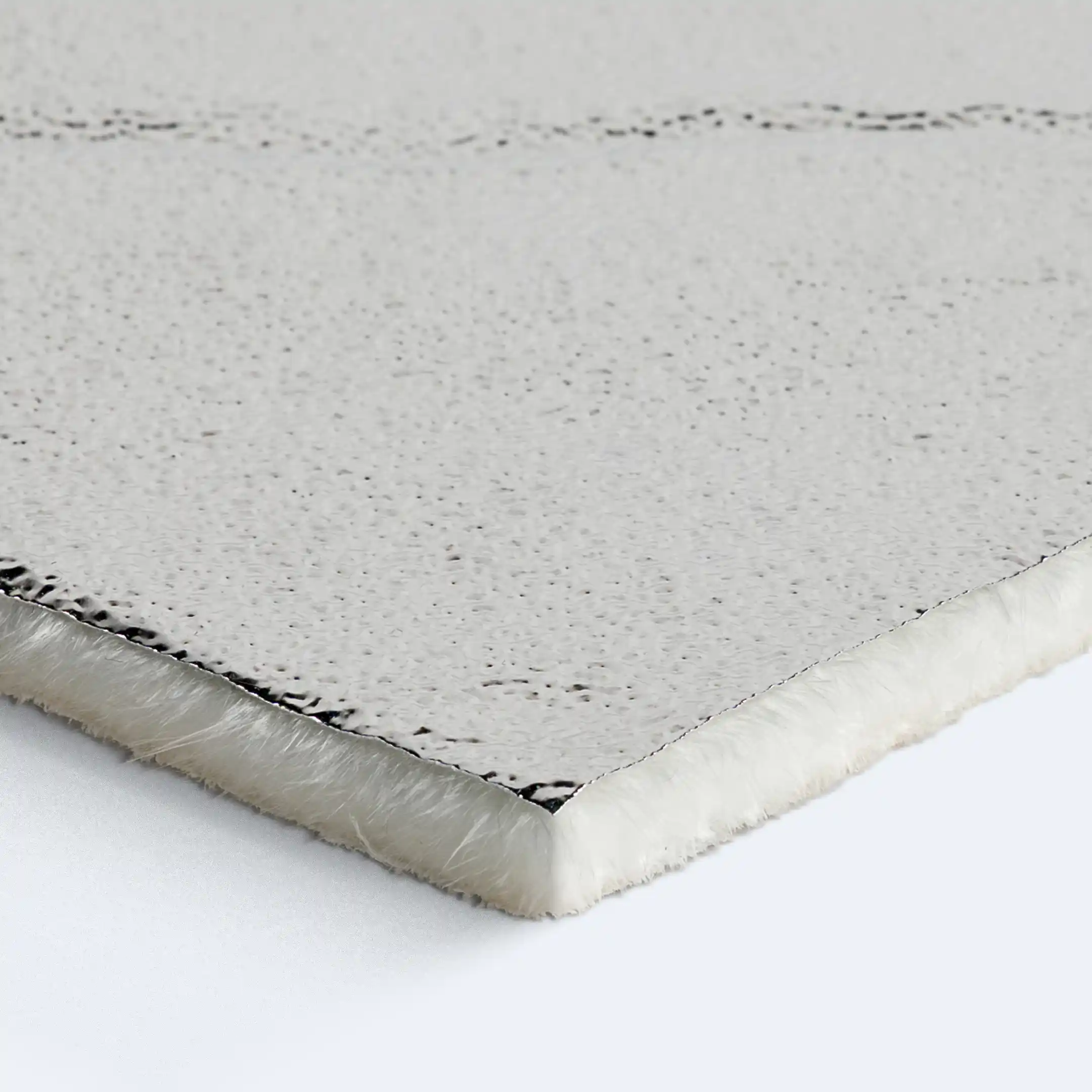
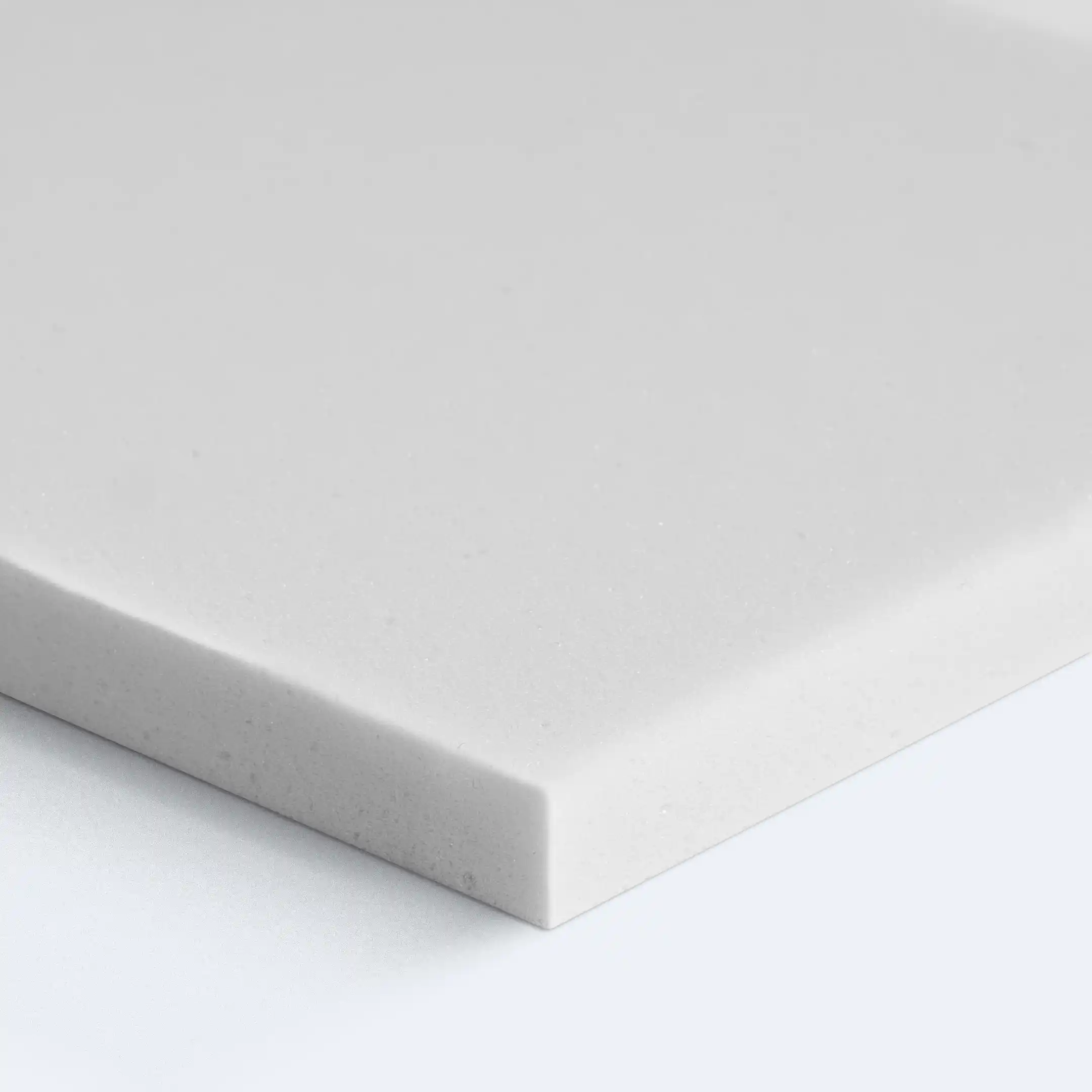
Flamex Basic
Weighted sound absorption coefficient up to αw = 1.00
Non-fibrous and dimensionally stable material
Ideal for acoustic lining in walls, ceilings, ducts, and machinery enclosures
Flamex Basic is an open-cell melamine foam panel developed for good sound absorption and fire-safe insulation. Its fine cell structure (pore size < 5 mm) provides broad acoustic performance. The material has a low density of about 9.5 kg/m³. It keeps its shape and performance across a temperature range of –43 °C to +150 °C. Because it is lightweight, highly effective acoustically and fire-resistant, Flamex Basic is suitable for both industrial and architectural applications.


Flamex Basic has a sound absorption coefficient of up to αw = 1.00. This corresponds to absorption Class A according to EN ISO 11654. The material also has good thermal insulation properties, with a thermal conductivity of λ = 0.033 W/(m·K) at 10 °C and λ = 0.037 W/(m·K) at 40 °C.
It meets several fire classifications:
- EN 13501-1 (B-s1,d0 for 5–15 mm, B-s2,d0 for 15–20 mm, C-s2,d0 for 20–80 mm)
- DIN 4102 Class B1
The foam is dimensionally stable, fibre-free and contributes to both sound and thermal insulation.
Flamex Basic is suitable for acoustic lining of walls, ceilings, ducts and machine enclosures. It is widely used in HVAC systems, cleanrooms, vehicles and industrial environments where good sound absorption and fire safety are important.
Installation is simple: panels can be cut to size with a sharp knife and glued onto clean, dry surfaces using a suitable adhesive. The material should be acclimatised for 24 hours before installation.
Downloads and specifications
Answers to common questions
A Life Cycle Assessment (LCA) is an environmental analysis of a product throughout its entire life cycle: from raw materials and production to use, maintenance, and end-of-life. An LCA provides insight into the environmental impact, such as CO₂ emissions, energy consumption, and material footprint, and helps ensure the product can be used in sustainable projects or comply with certifications such as BREEAM, LEED, or the National Environmental Database.
Yes. The revision of the European F-gas Regulation (in effect since 11 March 2024) does not affect the applicability of this product. The existing requirements for fire safety and acoustic performance remain in place and are fully supported by this product.
For building-related technical installations in new construction, an LCA certification is mandatory. This product has an LCA declaration that is included in the National Environmental Database.
Merford can perform acoustic analyses or simulations to predict noise levels and reverberation times based on material selection, room dimensions, and finishes, ensuring the right solution is designed.
Our acoustic materials generally require minimal maintenance. Dusting and cleaning is usually sufficient to maintain long‑term performance.
- Vibration isolation reduces mechanical vibrations from machines or equipment, preventing transmission to the building structure or floor.
- Sound insulation prevents sound from passing from one space to another, e.g., between rooms or to the exterior.
- Sound absorption reduces echo and reverberation within a space by damping sound waves, improving comfort and speech intelligibility.
Merford materials can provide one or more of these effects depending on the product type, such as absorption panels for rooms or isolation around ventilation units.