Exhaust Gas Silencer
Reduces engine and turbine exhaust sound by up to 55 dB(A)
Designed for high-temperature, high-flow applications
Suitable for power plants, industrial engines, and turbine exhaust systems
High noise levels from engines and turbines require effective control. The Exhaust Gas Silencer is designed to reduce exhaust noise without affecting system performance. Depending on configuration and operating conditions, a weighted noise reduction of up to 55 dB(A) can be achieved. Each silencer is custom-designed based on flow rate, temperature, pressure and allowable backpressure, ensuring reliable performance in demanding industrial environments where both acoustic control and operational continuity are essential.


The casing is manufactured from heat-resistant steel or stainless steel, suitable for continuous exposure to high-temperature exhaust gases. Internally, heat-resistant mineral wool or other high-grade materials, protected by perforated metal sheets, provide durable sound absorption across a wide frequency range. The design accounts for flow velocity, thermal expansion and backpressure limits, ensuring a balanced performance between acoustic attenuation and system efficiency.
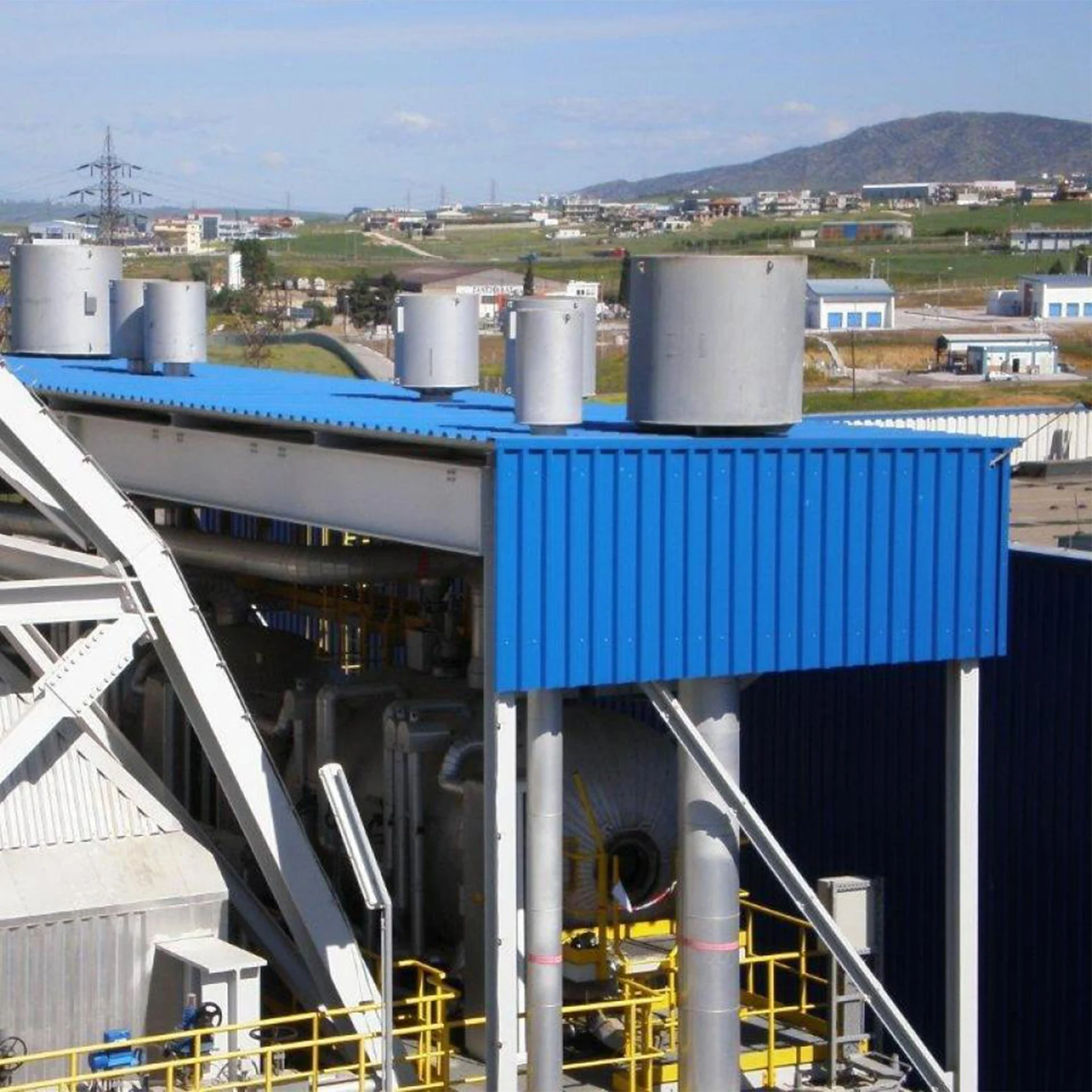
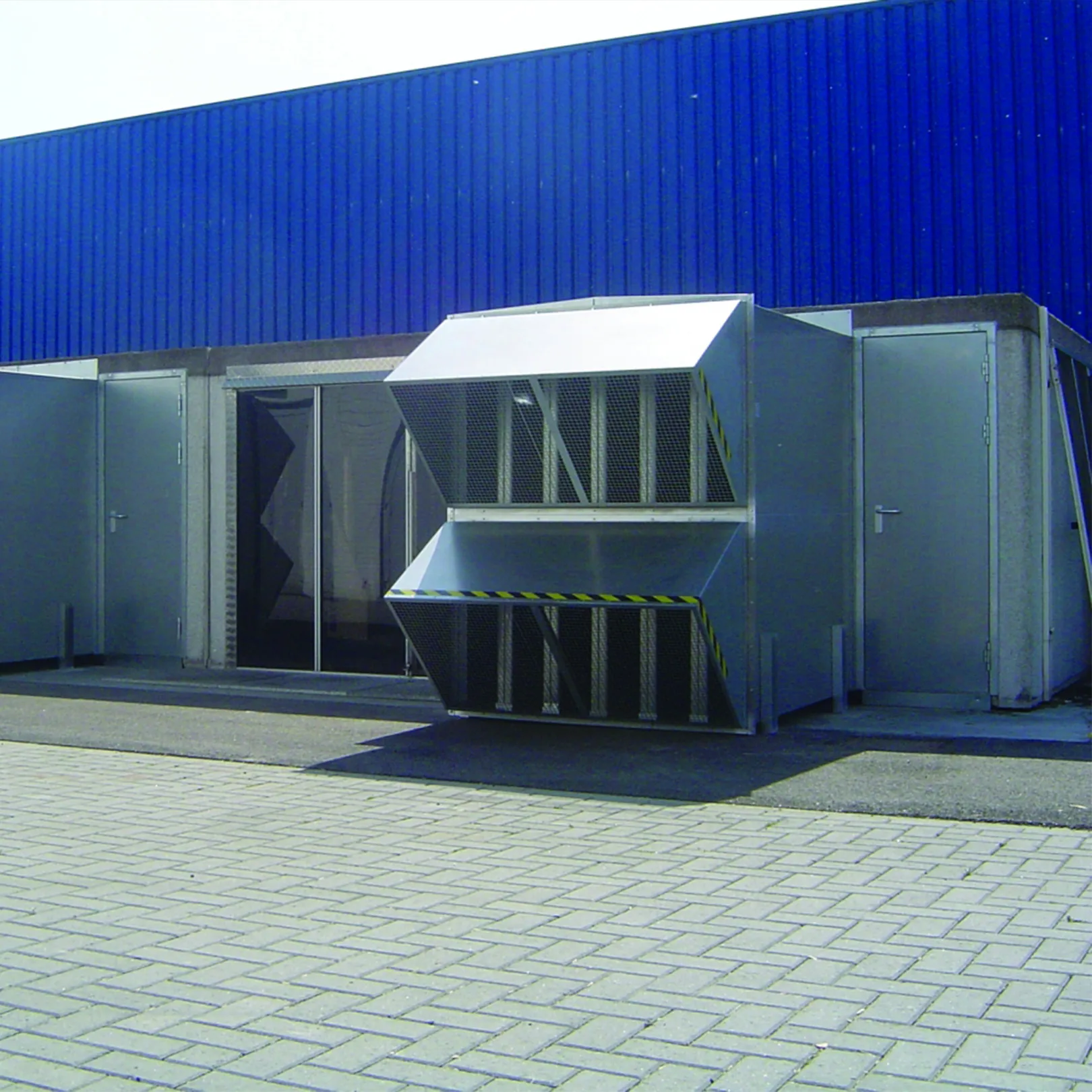
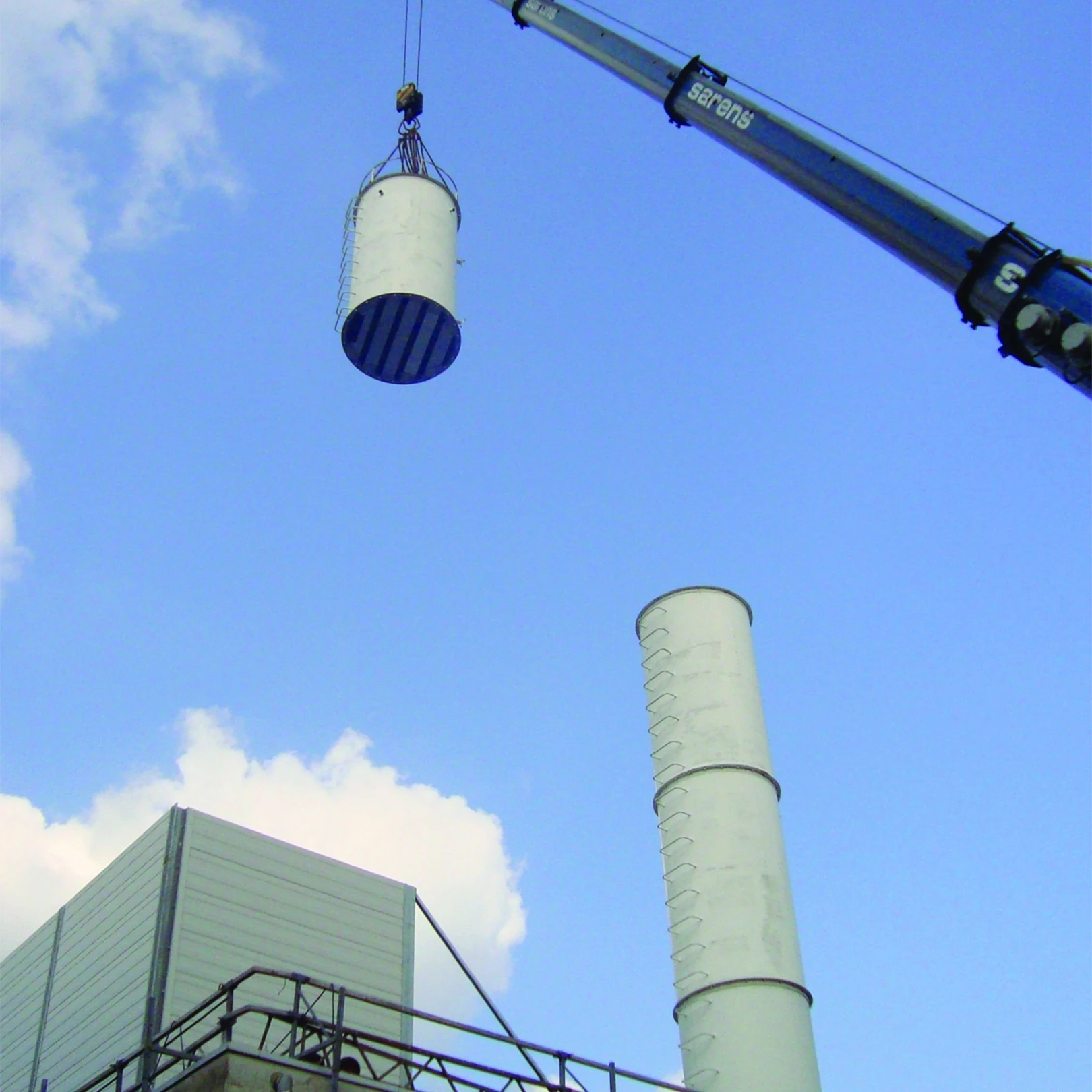
The Exhaust Gas Silencer is suitable for power plants, industrial engines, turbines and process installations where exhaust noise control is required. It can be installed directly on engine or turbine outlets, integrated into ducting systems, or combined with ventilation and filtration equipment. As each unit is custom-designed, it is suitable for both retrofit and new-build projects, ensuring effective noise control and reliable operation.
Downloads and specifications
Answers to common questions
Yes. All Merford silencers are custom-designed and can be used in both new construction and retrofit projects, ensuring optimal noise reduction and safety without requiring modifications to the existing installation.
Steam blow-off silencers are designed to handle intermittent releases of steam or gas at high pressure and temperature. They use a combination of reactive and absorptive elements to achieve effective noise reduction under these peak conditions. Exhaust gas silencers, on the other hand, are designed for continuous flow from engines and turbines. They are engineered to accommodate high flow velocities, thermal loads and gas expansion during operation.
Both types of silencers are custom-designed solutions, but they differ in internal configuration, material selection and design approach, depending on the operating medium and process conditions.
Yes. Silencers can be integrated with ventilation systems, acoustic enclosures or modular system components to achieve higher levels of noise reduction and overall system efficiency within a single installation.